

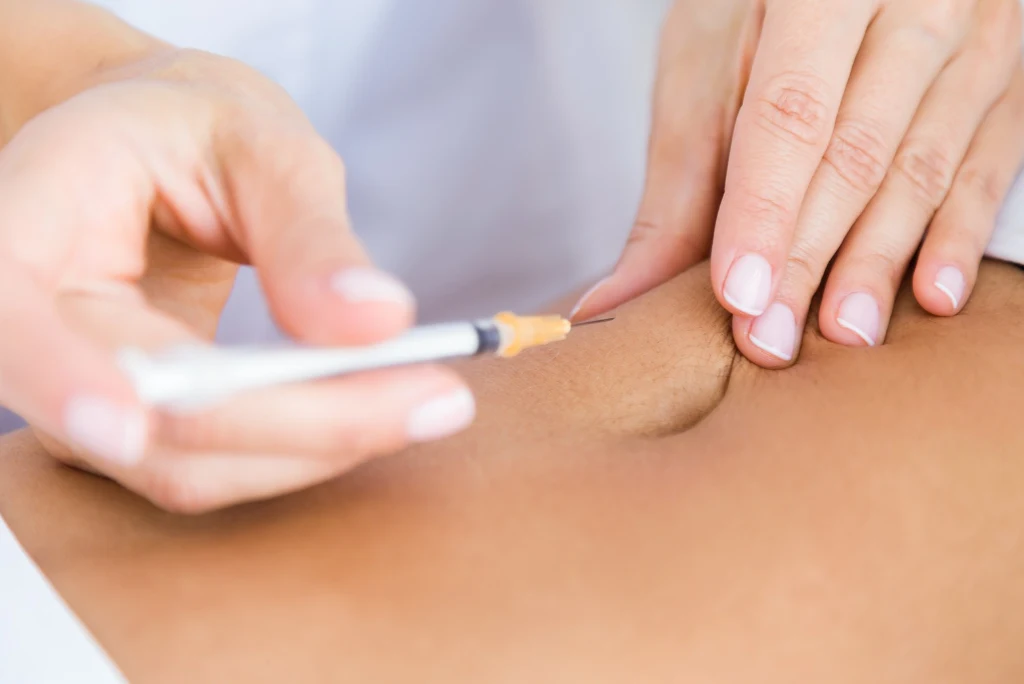
Almost every week someone sits across from me, pinches the fat above their waistband, and asks whether the freezing treatment they saw online will get rid of it. Sometimes the answer is yes. Quite often they have come to the wrong treatment for the fat they actually have, and nobody has told them the difference.
So let me do that here: what fat freezing can and cannot do, who it suits, the honest numbers, and the one complication I rarely see mentioned in local clinic marketing even though it is well documented in the medical literature.
What Is Fat Freezing and How Does Cryolipolysis Work?
Fat freezing, known clinically as cryolipolysis, uses controlled cooling to damage fat cells through the skin without cutting anything.
The principle is simple. Fat cells are more sensitive to cold than skin, nerves, muscle or blood vessels. Hold a pocket of fat at a precise low temperature for a set period and the fat cells crystallise and die while the tissue above stays intact. Your body then clears the damaged cells through its own lymphatic and immune processes.
Why the Results Take Months Rather Than Days
This is the part patients find hardest to accept. Nothing is suctioned out, so the cells have to be broken down and carried away by your own metabolism. In my experience the first visible change shows around week four to six, and the fuller result settles between week eight and twelve. If you expect to look different next week, this is the wrong treatment for you.
Does Fat Freezing Actually Work? What the Numbers Show
It works, within limits. Published reviews put a single cycle at roughly a tenth to a quarter of the fat layer thickness in the treated area. That sounds modest because it is. This is a contouring treatment, not a weight loss treatment.
What people hope for | What cryolipolysis does |
Weight loss on the scale | Little to no change in weight. It targets shape, not kilos |
Less belly fat all over | Only the pocket under the applicator, not the whole abdomen |
Losing internal belly fat | No effect on visceral fat. That responds to diet and activity |
Instant results | Gradual change across eight to twelve weeks |
Tighter skin | Minimal tightening. Loose skin needs a different tool |
The cells destroyed in a session do not regrow, and that is often sold as the headline benefit. What it does not mean is that the area is protected for good, because the fat cells left behind can still enlarge if your weight climbs. I have seen treated areas return to their original size in patients who gained eight or ten kilos afterwards.
Who Is a Good Candidate for Fat Freezing?
Who Is a Good Candidate for Fat Freezing?
The ideal candidate is not the person who needs it most. That is the uncomfortable truth of this treatment. You are likely to do well if you:
- Are already within a reasonable range of your target weight
- Have a distinct pocket of fat you can pinch between your fingers
- Have reasonably firm skin over that pocket
- Have held a stable weight for roughly six months
- Want a modest change in outline rather than a dramatic reduction
Who Should Consider Something Else First
- A high overall body fat percentage.Treating one pocket when the whole body carries excess fat gives a disappointing result. A structured medical weight loss programme comes first, contouring afterwards.
- Loose, hanging skin as the main concern.Freezing fat under slack skin can make the slackness more obvious. Laxity needs energy-based tightening such as 7D HIFU or a collagen-stimulating option like Endolift X.
- Firm fat that does not pinch away from the muscle.Applicators need to draw tissue in, so flat, dense fat suits other methods better.
- A cold-related blood disorder,cryoglobulinaemia, cold urticaria or paroxysmal cold haemoglobinuria. These are contraindications, not minor cautions.
- Pregnancy or breastfeeding,a hernia, or recent surgery in the area.
What Is Paradoxical Adipose Hyperplasia, and How Common Is It?
This is the section I would want a family member to read before booking.
Paradoxical adipose hyperplasia, or PAH, is a recognised complication of cryolipolysis in which the treated area grows larger and firmer instead of smaller. The bulge usually appears two to five months afterwards, often matching the shape of the applicator. It does not resolve on its own, and correcting it generally requires liposuction or surgical removal.
It is uncommon. Most published figures sit well under one percent of treated cycles, though some series using newer devices report higher numbers. Men and certain abdominal areas appear to be affected more often.
I am not raising this to put anyone off. I raise it because consent means knowing the realistic downside, and because a clinic that has not mentioned PAH has either not read the literature or chosen not to share it. Ask about it directly before you sign anything, anywhere.
Fat Freezing vs HIFU vs Fat Loss Injections: Which One Suits Your Fat?
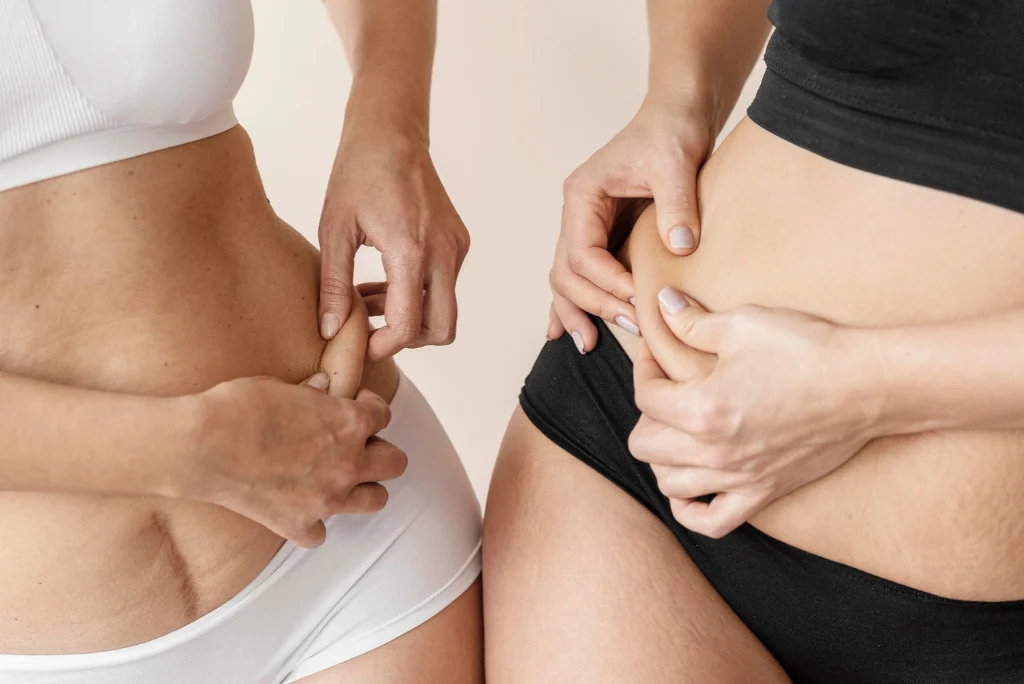
This is where most of the confusion sits. These treatments are not competitors doing the same job. They address different problems, and the right choice depends on what your tissue is made of.
Treatment | Best suited to | How it works | Main limitation |
Pinchable, discrete fat pockets | Controlled cooling damages fat cells | Slow results, no tightening | |
Softer, diffuse fat over larger areas | Ultrasound disrupts fat cell walls | Gentler effect per session | |
Small stubborn areas, under the chin | Injected agent breaks down local fat | Swelling after each round | |
Mild to moderate laxity with some fat | Focused ultrasound at set depths | Not a bulk fat reduction tool | |
Muscle tone, flat stomach goals | Electromagnetic muscle contraction | Builds muscle, limited fat change | |
Laxity with small deposits, jawline, arms | Micro-optical fibre under the skin | Minimally invasive, short recovery |
In practice I often combine rather than choose. A patient with a soft lower abdomen and mild laxity usually does better with cooling for the fat and tightening afterwards than with either alone. Someone chasing a flatter stomach who already has a thin fat layer needs muscle work, not fat reduction, and gets nowhere with freezing.
What Are the Side Effects of Cryolipolysis?
Most reactions are mild and settle without intervention:
- Redness, swelling and firmness for a few days
- Numbness lasting two to four weeks
- Tingling, itching or a dull ache as sensation returns
- Bruising, more likely on blood thinners
- Occasional late-onset nerve pain, usually self-limiting
On brown skin I also keep an eye on pigment changes at the applicator edges. They are uncommon with properly managed protocols, but Fitzpatrick type IV to VI skin reacts more readily to inflammation of any kind, which is one reason I prefer these treatments supervised rather than run by an untrained operator.
How Do We Decide Which Body Contouring Treatment You Need?
My consultation follows the same order every time, and it starts with a pinch test rather than a brochure.
- Assess the tissue.Fat, loose skin, weak muscle, or a combination? Each points somewhere different.
- Check the fat type.Does it pinch away cleanly, or sit dense and flat?
- Review the weight history.Stable, or actively changing? Active change means a different sequence.
- Rule out contraindications.Cold disorders, hernias, pregnancy, recent surgery in the area.
- Agree a realistic target.I would rather say the result will be modest than disappoint you in three months.
If none of our non-surgical options will give you the change you want, I say so, and we discuss surgical body contouring instead. Overselling a gentle treatment to someone who needs a different category of procedure helps nobody.
Final Thoughts
Fat freezing has a real place. For a defined, pinchable pocket on someone already close to their target weight, it is a reasonable, low-downtime way to change an outline. For generalised weight concerns, loose skin or dense fat it tends to disappoint, and no amount of marketing changes that.
The useful question is not whether cryolipolysis works, but whether your fat is the kind that responds to it. That takes an examination rather than a quiz on a website.
At Le Lotus Clinique our body contouring consultations across Islamabad, Lahore, Karachi, Multan, Peshawar and Rawalpindi are built around that assessment, and we are comfortable telling patients when the honest answer is a different treatment or none at all. You can book a consultation at the branch nearest you.
Frequently Asked Questions
How long do fat freezing results last?
Is fat freezing suitable for the stomach only?
How many sessions will I need?
Can fat freezing help with loose skin after pregnancy or weight loss?
Does fat freezing hurt?
Almost every week someone sits across from me, pinches the fat above their waistband, and asks whether the freezing treatment they saw online will get

Let me clear something up before anything else. Dark underarms are not a hygiene problem. I say this at the start of almost every consultation,
A patient came in last month with a raised scar on her earlobe from a piercing she had at fourteen. She had been told twice