

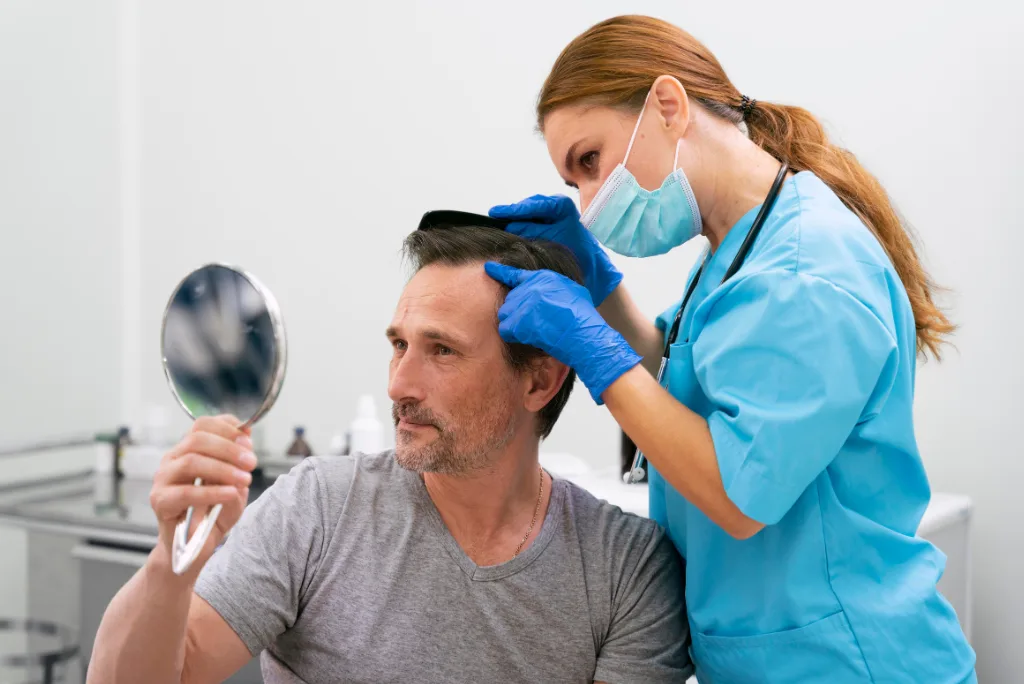
Every week at our F8 Islamabad clinic, I speak to patients who have already spent hours researching PRP hair treatment online. They come in knowing the three-step process; they have seen the before and after photos, and they have a rough idea of the price range. What they want to know is something no competitor blog seems willing to answer directly: is it genuinely worth spending PKR 60,000 to 150,000 on a course of PRP sessions in Islamabad, or are there better options for their specific situation?
That is the question I want to answer honestly in this guide. Not a generic overview of what PRP is, but a real clinical perspective on who responds well to it, what the price difference between clinics reflects, and the situations where I tell patients to consider something else entirely. If you are trying to decide whether PRP hair treatment is the right investment for your hair loss, this is the guide I wish every patient reads before their first consultation.
The Three Hair Loss Patterns We See Most in Islamabad Patients
Hair loss patterns in Islamabad patients are distinctly different from what the international medical literature describes, and this matters when assessing whether PRP is the right treatment. The majority of patients we see at our F8 clinic are dealing with one of three scenarios: stress-related hair thinning triggered by the relentless pace of working life in the capital, hormonal hair loss in women between the ages of 25 and 45 often connected to PCOS or post-pregnancy changes, and early to mid-stage androgenetic alopecia in men who have been ignoring the problem for longer than they should have.
What this means practically is that PRP hair treatment works very well for a significant portion of our Islamabad patients, but it is not the right answer for everyone who walks through our door. The patients who respond best are those who come in early, before significant follicle miniaturization has occurred, and who have realistic expectations about what a biological treatment can achieve in a climate as harsh on hair as Islamabad’s dry winters and dusty summers.
The patients we redirect are equally important to mention. If someone comes in with advanced hair loss where the follicles in the affected area are no longer active, PRP cannot revive them. In those cases, we have an honest conversation about whether hair transplant consultation is more appropriate, or whether our exosome therapy program, which delivers significantly higher concentrations of growth factors than standard PRP, is a better clinical fit. This kind of honest redirection is something I consider a core part of good practice, even when it means a patient leaves for a different treatment pathway.
PRP Hair Treatment Price in Islamabad — An Honest Breakdown
The price range you will find quoted across Islamabad clinics for PRP hair treatment spans from PKR 10,000 to PKR 25,000 per session. That is a significant gap, and it deserves a straight explanation rather than the vague “it depends on the clinic” answer most guides give you.
At the lower end of that range, you are typically paying for a basic centrifugation protocol using standard PRP kits. The platelet concentration achieved is functional but modest. At the upper end, clinics like Le Lotus Clinique use double spin centrifugation protocols and premium PRP preparation systems that yield a significantly higher platelet concentration per session. Since the growth factors released by those platelets are what actually stimulate your follicles, the concentration difference is clinically meaningful, not just a marketing distinction.
Here is what a realistic cost breakdown looks like for a standard PRP hair treatment course in Islamabad:
Treatment Plan | Sessions | Average Cost Per Session (PKR) | Estimated Total (PKR) |
Initial course | 3 to 4 sessions | 15,000 to 25,000 | 45,000 to 100,000 |
Maintenance sessions | Every 4 to 6 months | 15,000 to 25,000 | 30,000 to 50,000 per year |
Combined PRP + mesotherapy | 3 to 4 sessions | 20,000 to 35,000 | 60,000 to 140,000 |
These are indicative market ranges for Islamabad in 2026. Actual pricing at Le Lotus Clinique is confirmed during your free consultation based on your individual hair loss assessment and treatment plan. Prices vary based on clinic, technology used, and number of sessions required. Results and session requirements vary from person to person.
What the price does not usually include at most clinics, but should, is a proper scalp analysis before your first session, a growth factor concentration report from your blood preparation, and a documented progress assessment after each session. These are standard at Le Lotus Clinique Islamabad and are part of what makes a higher price point a defensible clinical investment rather than simply a more expensive version of the same service.
The Three Questions We Ask Every Patient Before Recommending PRP

Before recommending PRP to any patient at our Islamabad clinic, we always work through three clinical questions. The answers determine whether PRP is the most appropriate starting point, whether we need to investigate something else first, or whether a different treatment altogether will serve the patient better.
How long have you been losing your hair?
This is the single most important question. PRP works by stimulating follicles that are weakened but still present. A patient who has noticed thinning over the past 12 to 18 months is in a fundamentally different position from someone who has been losing hair for 5 to 7 years. The longer the hair loss has progressed without intervention, the greater the likelihood that follicle miniaturisation has advanced to a point where PRP alone will not produce meaningful regrowth. Early intervention consistently delivers better outcomes. If you have been watching your hairline recede or your parting widen and have not yet sought treatment, starting sooner rather than later will always work in your favour.
What is your hormonal status?
This question matters more for our female patients than our male patients, though it applies to both. Hormonal hair loss, whether driven by PCOS, thyroid dysfunction, post-pregnancy changes, or perimenopause, will not respond sustainably to PRP if the underlying hormonal driver is not addressed simultaneously. We have seen patients invest in multiple PRP sessions with disappointing results, only to discover further investigation that an undiagnosed thyroid condition was actively working against the treatment. At Le Lotus Clinique, we always recommend a basic hormonal panel before beginning PRP for female patients presenting with diffuse hair thinning.
Have you tried any hair loss treatment before?
A patient who has already completed a course of PRP elsewhere and seen minimal results is a different clinical case from someone starting fresh. Previous treatment history helps us calibrate expectations and decide whether to adjust the protocol, combine PRP with our exosome therapy for enhanced growth factor delivery, or recommend a scalp biopsy to investigate whether the hair loss has an underlying dermatological cause that has not yet been identified.
PRP vs Exosomes — When We Recommend Which at Le Lotus Clinique
This is the comparison most Islamabad patients do not know to ask about, but it is often the most important clinical decision in a hair loss consultation. Both treatments stimulate hair follicle activity through growth factor delivery, but they work differently and suit different patient profiles.
PRP uses growth factors extracted from your own blood. Exosome therapy uses laboratory-derived exosomes that contain significantly higher concentrations of growth factors than standard PRP preparation can achieve. The clinical implication is straightforward: for mild to moderate hair thinning caught early, PRP delivers good results at a more accessible price point. For patients with more advanced hair loss, or those who have tried PRP with limited success, exosomes offer a more potent biological stimulus.
Here is how we approach the decision at our F8 Islamabad clinic:
- Early-stage hair thinning: PRP is our first recommendation. It is effective, well tolerated, and the natural starting point for patients new to hair restoration treatment
- PCOS-related hair loss in women: PRP alongside hormonal management. We never treat PCOS hair loss with PRP alone
- Post hair transplant support: PRP accelerates graft recovery and improves density in the months following a transplant
- Advanced androgenetic alopecia: Exosomes over PRP — the higher growth factor concentration makes a meaningful clinical difference at this stage
- Patients who completed PRP elsewhere with poor results: Exosomes as the next step, with a full scalp assessment first
The honest answer is that neither treatment is universally better. The right choice depends entirely on your individual hair loss pattern, how long it has been progressing, and what your scalp assessment shows. Our PRP for hair treatment page covers the full protocol we use at Le Lotus Clinique, and our exosome therapy page explains the science behind why growth factor concentration matters for treatment outcomes.
What Realistic PRP Hair Treatment Results Look Like — Month by Month
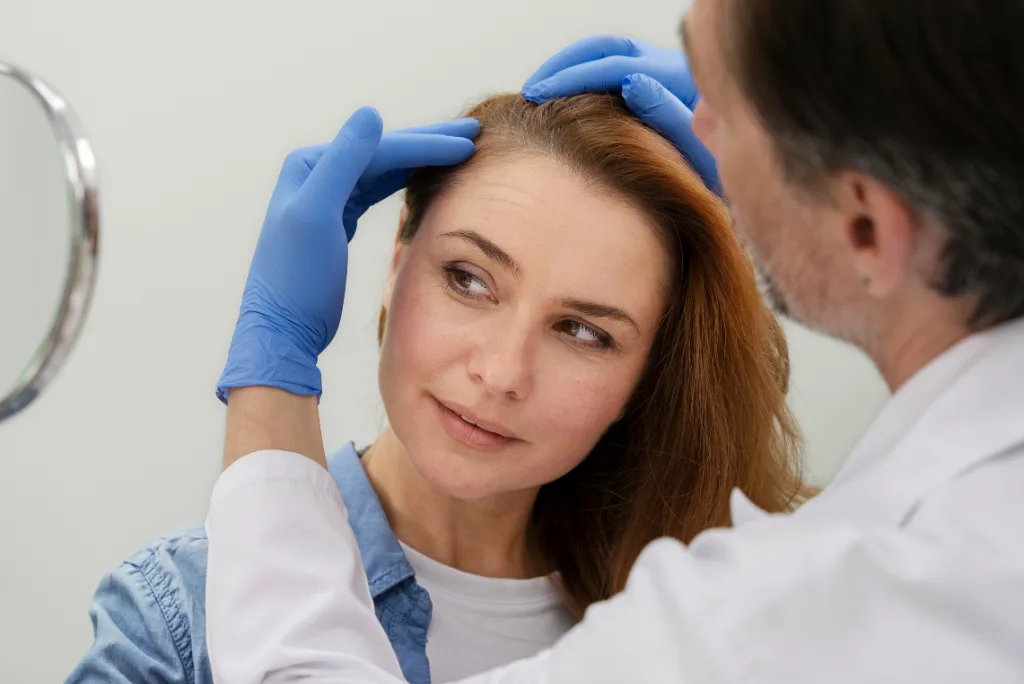
One of the most common sources of disappointment with PRP hair treatment in Islamabad is unrealistic expectations set before the first session. Most patients expect visible regrowth within a few weeks. Biology simply does not work that way, and I think it is important to be direct about this from the start.
Here is what we observe in our patients at Le Lotus Clinique across a standard PRP treatment course:
Weeks 1 to 4 — The Invisible Phase
Most patients notice nothing visible during this period, and some reports slightly increased shedding. This is normal. The PRP is stimulating dormant follicles which temporarily enter an active growth cycle before producing new hair. Increased shedding in this phase is a positive indicator that follicle activity has been triggered, not a sign that the treatment is failing.
Month 2 to 3 — Early Signals
Patients notice that existing hair feels thicker and stronger at the root. New fine hair strands may appear at the hairline or in areas of previous thinning. This is the phase where patients who came in expecting dramatic regrowth can become discouraged — the changes are real but subtle at this stage.
Month 4 to 6 — Visible Improvement
This is where most patients see the results that justify the investment. Hair density improves noticeably; new growth becomes visible to others, and the overall appearance of the scalp changes meaningfully. Patients dealing with stress-related or hormonal hair loss in Islamabad typically see their strongest response in this window.
Beyond 6 Months — Maintenance
PRP results are not permanent. Without maintenance sessions every 4 to 6 months, the follicle stimulation gradually diminishes, and hair loss can resume. This is one of the honest realities of PRP that patients deserve to factor into their total cost calculation before starting treatment. Individual results vary based on hair loss type, hormonal profile, age, and consistency of treatment.
PRP vs Exosomes — When We Recommend Which at Le Lotus Clinique
This is the comparison most Islamabad patients do not know to ask about, but it is often the most important clinical decision in a hair loss consultation. Both treatments stimulate hair follicle activity through growth factor delivery, but they work differently and suit different patient profiles.
PRP uses growth factors extracted from your own blood. Exosome therapy uses laboratory-derived exosomes that contain significantly higher concentrations of growth factors than standard PRP preparation can achieve. The clinical implication is straightforward: for mild to moderate hair thinning caught early, PRP delivers good results at a more accessible price point. For patients with more advanced hair loss, or those who have tried PRP with limited success, exosomes offer a more potent biological stimulus.
Here is how we approach the decision at our F8 Islamabad clinic:
- Early stage hair thinning: PRP is our first recommendation. It is effective, well tolerated, and the natural starting point for patients new to hair restoration treatment
- PCOS-related hair loss in women: PRP alongside hormonal management. We never treat PCOS hair loss with PRP alone
- Post hair transplant support: PRP accelerates graft recovery and improves density in the months following a transplant
- Advanced androgenetic alopecia: Exosomes over PRP — the higher growth factor concentration makes a meaningful clinical difference at this stage
- Patients who completed PRP elsewhere with poor results: Exosomes as the next step, with a full scalp assessment first
The honest answer is that neither treatment is universally better. The right choice depends entirely on your individual hair loss pattern, how long it has been progressing, and what your scalp assessment shows. Our PRP for hair treatment page covers the full protocol we use at Le Lotus Clinique, and our exosome therapy page explains the science behind why growth factor concentration matters for treatment outcomes.
Ready to Find Out if PRP is Right for Your Hair Loss?
The most reliable way to know whether PRP hair treatment is worth the investment for your specific situation is a proper clinical assessment, not another blog post. Book a free consultation at Le Lotus Clinique Islamabad and our consultant dermatologist will assess your hair loss pattern, hormonal profile, and treatment history before giving you an honest recommendation.
WhatsApp Our Islamabad Team
Book Your Free Consultation
Frequently Asked Questions
Is PRP hair treatment halal?
Can women with PCOS get PRP hair treatment in Islamabad?
How is PRP different from mesotherapy for hair loss?
Can I combine PRP with a hair transplant at Le Lotus Clinique?
Does PRP work for beard growth in Pakistan?
Someone comes in having read that microneedling fixes acne scars. They’ve seen the before-and-afters. Then they get quoted two very different prices for two things
A woman came in last month with a shopping bag. Inside it were seven bottles: two biotin brands, a multivitamin, collagen powder, an imported hair

There is a bottle of sunscreen in your bathroom drawer right now. You bought it after someone told you to. You wore it for about