

Men arrive at our clinic having read that scalp micropigmentation lasts eight years, costs eighteen thousand rupees, and restores their hairline. Three claims, and not one of them holds up under scrutiny.
SMP is a genuinely good treatment for the right person. It is also the most misunderstood procedure in hair restoration, partly because clinic websites describe it as though it grows hair. It does not. It never has.
What it does is create the appearance of density using pigment deposited into the scalp, essentially a highly specialised tattoo. Done well by a skilled practitioner, the result is convincing enough that people will not know unless you tell them. Done badly, it fades to blue, sits at the wrong depth, or gives you a hairline that ages poorly.
This guide covers what SMP realistically achieves, who it suits and who it does not, why the price ranges from eighteen to seventy-five thousand rupees, how long it actually lasts before fading, and the questions worth asking before anyone puts a needle to your scalp.
What Scalp Micropigmentation Actually Is
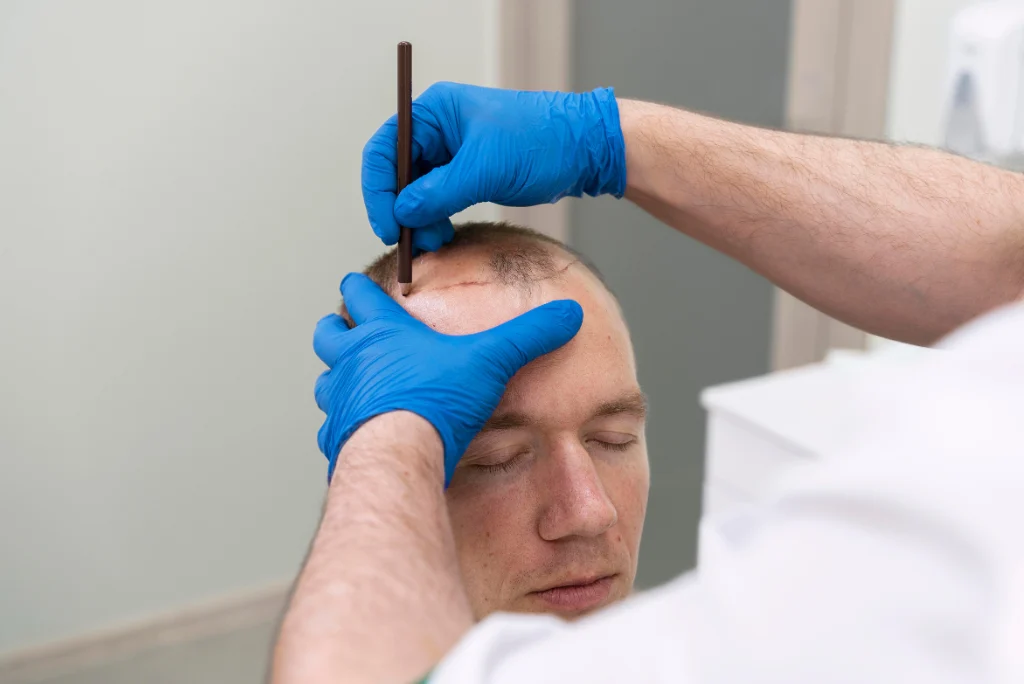
Scalp micropigmentation deposits tiny dots of pigment into the upper dermis of the scalp, each one sized and placed to mimic a hair follicle emerging from the skin. Viewed together across the treated area, those dots read as stubble on a closely shaved head.
The technique borrows from tattooing, but the differences matter. The needle is finer, the depth is shallower, the pigment is formulated to fade rather than persist, and the deposit is a dot rather than a line. A tattoo artist without SMP training will place pigment too deep, and it will spread and blur within a year.
Most people need two to four sessions spaced ten days to three weeks apart. Density is built gradually across those sessions rather than achieved in one, which allows the practitioner to assess healing and adjust tone before adding more.
What It Does Not Do
It does not grow hair. No follicle is stimulated, no growth factor is delivered, nothing changes biologically. The scalp after SMP has exactly the same number of active follicles as before.
It does not replace a transplant. A transplant relocates living follicles that grow, can be styled, and respond to normal hair care. SMP creates a visual impression of density on skin.
It is not permanent. Pigment fades. This is intentional, because permanent ink would remain fixed while your face, hairline and skin tone all change with age.
It does not work with long hair. This is the point most patients miss entirely, and we return to it later.
Why the Distinction Matters
A patient who books SMP expecting growth will be dissatisfied no matter how well the work is done, because the treatment was never capable of what they wanted.
A patient who books SMP understanding it as a cosmetic illusion, and who wants the shaved-head look to appear intentional rather than thinning, is usually very pleased.
Same procedure, same result, entirely different outcome, decided before anyone booked anything.
Who Scalp Micropigmentation Suits
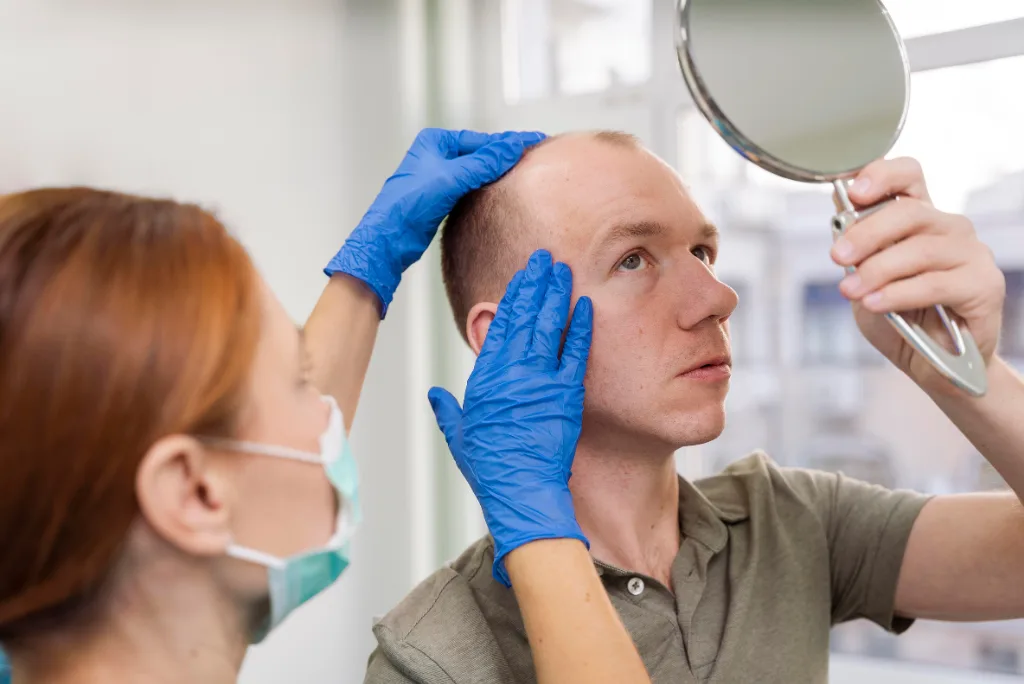
SMP works extremely well for a narrow group of people and poorly for everyone else. Working out which you are is the single most useful thing you can do before booking.
SMP Works Well If
You have accepted a shaved or very short hairstyle. This is the primary condition and the one most patients do not realise. SMP mimics stubble. It only reads as convincing when your real hair is the same length as the dots.
You are advanced in male pattern baldness. Norwood stage five, six or seven, where a transplant would need more donor hair than you have. SMP gives the crown and hairline a defined edge rather than a bare dome.
You want a receded hairline redefined. A well-placed SMP hairline restores structure to the face without surgery.
You have transplant scars to conceal. Strip scars from FUT and dotted donor scarring from FUE both camouflage well. This is one of SMP’s genuinely strong applications.
You have alopecia areata or scarring alopecia. Patchy loss where hair will not regrow responds well to pigment.
You want density illusion between transplant sessions. SMP shaded behind transplanted hair makes a thinner result look fuller.
SMP Is Usually the Wrong Choice If
You want to keep long hair. Dots visible through longer hair look exactly like what they are. If you are unwilling to shave, this treatment is not for you.
You are in early-stage thinning. You still have follicles worth treating. PRP, exosome therapy or medication address the actual loss. SMP conceals rather than treats, and it does not stop progression.
Your hair loss is still actively progressing. Pigment placed at today’s hairline will sit oddly once the surrounding hair recedes further. Stabilise first.
You are a woman with diffuse thinning. SMP suits defined edges and shaved styles. Diffuse female pattern loss usually responds better to density-focused treatment.
You want it to look like grown hair. SMP looks like a close shave. That is the effect. If a shaved head does not suit you, the pigment will not change that.
The Question We Ask First
Before anything else, we ask patients to picture themselves with a completely shaved head and decide honestly whether they like what they see.
If the answer is yes, SMP will likely make that look sharper and more deliberate.
If the answer is no, SMP will not give you what you are hoping for, and we would rather say so at consultation than after four sessions.
Pigment Quality: Why Some SMP Turns Blue
This is the risk nobody in Pakistan writes about, and it is the one most likely to cause lasting regret.
Poor quality pigment does not simply fade. It changes colour, usually toward blue or green, and once it does, the only correction is laser removal across multiple sessions.
Why It Happens
Tattoo ink and SMP pigment are not the same product, though cheaper practitioners frequently substitute one for the other.
Standard black tattoo ink contains carbon-based particles designed to remain permanently in the deep dermis. As those particles break down over years, the larger molecules scatter light differently and the deposit shifts toward blue. On an arm, under clothing, that is tolerable. Across a scalp, in sunlight, it is not.
Proper SMP pigment is formulated differently. It is carbon-based but designed to fade in tone rather than shift in hue, and it sits shallower so the body clears it gradually and evenly.
The Second Cause: Depth
Even correct pigment turns blue if placed too deep.
SMP sits in the upper dermis, roughly 1mm to 1.5mm. Tattoo depth is 2mm or more. Pigment deposited at tattoo depth spreads through surrounding tissue over months, and what began as a crisp dot becomes a soft blur with a bluish cast.
This is why a tattoo artist without SMP-specific training is a genuine risk regardless of how good their tattoo work is. The skill transfers. The depth does not.
How to Reduce the Risk
- Ask which pigment brand is used and whether it is SMP-specific rather than tattoo ink
- Ask to see healed work at twelve months or older, not fresh photographs taken on the day
- Ask what depth the practitioner works at
- Ask what happens if the colour shifts and whether correction is included
- Look at the practitioner’s portfolio for hairline shape, not just density
Fresh SMP almost always looks good. The test is what it looks like a year later, which is why healed photographs matter more than the ones clinics usually display.
If It Has Already Happened
Blue or blurred SMP can be lightened with Q-switch laser, the same technology used for tattoo removal. It takes multiple sessions, results vary, and it is considerably more expensive than the original treatment.
Prevention here is not a slogan. It is genuinely the entire strategy.
Matching Pigment to Pakistani Skin Tones
Most SMP training, technique and pigment guidance was developed on lighter skin. Applied unchanged to Fitzpatrick types III to V, the results look wrong in ways that are difficult to correct afterwards.
The Contrast Problem
SMP works by contrast. The pigment dot must be darker than the surrounding scalp, but only slightly, so it reads as stubble rather than as a mark.
On lighter skin, a mid-grey pigment produces natural contrast. On medium to deep Pakistani skin, that same grey either disappears entirely or, if the practitioner compensates by going darker, produces dots that look heavy and artificial.
The correct approach is to dilute pigment to a tone that sits just above the patient’s own scalp colour, then build density gradually across sessions rather than aiming for full coverage in one.
Why Diluting Matters More Here
A practitioner who applies undiluted pigment to deeper skin creates a result that looks acceptable on day one and increasingly obvious as it settles.
Fresh SMP always appears darker than the healed result, but the gap is wider on deeper skin. Judging the outcome at day one is misleading. This is why building across two to four sessions is not an upsell, it is how the technique works correctly.
Two Things That Affect Pakistani Patients Specifically
Sun exposure. UV accelerates pigment breakdown, and Pakistan’s UV levels are high year round. A scalp is the most exposed surface on the body. Daily sun protection is not optional aftercare here, it directly determines how long the work lasts.
Post-inflammatory hyperpigmentation. Deeper skin can darken in response to the micro-trauma of needling. This usually settles, but it means the healed result should be assessed at six to eight weeks rather than immediately.
What to Ask
Ask the practitioner to show healed work on skin similar to yours, not on lighter-skinned clients.
The technique is the same. The tone selection is not, and a portfolio full of results on fair skin tells you very little about how your scalp will look at twelve months.
Scalp Micropigmentation Cost in Pakistan
Quotes range from PKR 18,000 to PKR 75,000 across Pakistani clinics for what is advertised as the same treatment. That is a four-fold spread, and it usually reflects three things: how much scalp is being covered, how many sessions the quote includes, and what pigment is being used.
Treatment Area | Full Course (PKR) | Sessions |
Hairline redefinition only | 30,000 to 55,000 | 2 to 3 |
Crown and vertex | 40,000 to 70,000 | 2 to 3 |
Frontal third | 45,000 to 75,000 | 3 |
Full scalp, Norwood 5 to 7 | 80,000 to 160,000 | 3 to 4 |
Density work behind existing hair | 50,000 to 90,000 | 2 to 3 |
Transplant scar camouflage | 35,000 to 65,000 | 2 to 3 |
Annual touch-up | 15,000 to 35,000 | 1 |
Price disclaimer: These are indicative market ranges for Pakistan as at August 2026. Actual pricing at Le Lotus Clinique is confirmed at consultation once the treatment area and session count have been assessed. Session requirements vary between individuals. |
How Long Does Scalp Micropigmentation Actually Last?
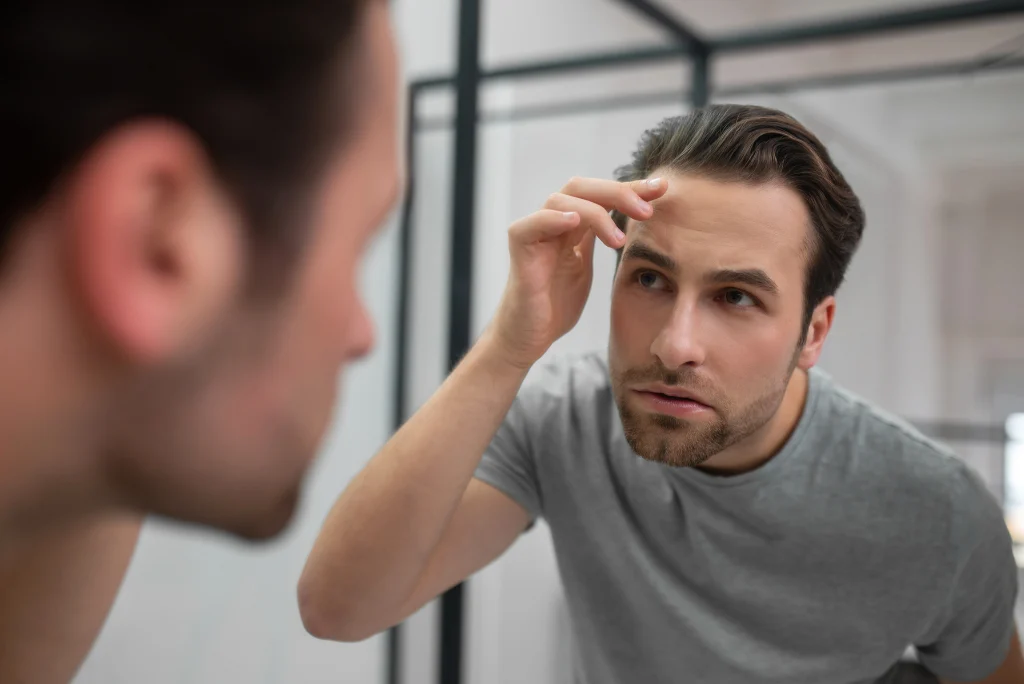
Pakistani clinic websites quote anything from three years to eight. Those cannot all be true, and the range tells you the figure is being estimated rather than observed.
The honest answer is that most patients notice meaningful fading between two and four years, with the first signs appearing earlier on some scalps than others.
What Fading Actually Looks Like
SMP does not vanish. It softens.
The dots lose definition first, becoming slightly diffuse rather than crisp. Tone lightens next, so the contrast against the scalp reduces and the overall effect looks less convincing at close range before it does at a distance.
Most patients notice it themselves before anyone comments. That is usually the point to book a touch-up rather than waiting for it to disappear entirely.
What Shortens It
Factor | Effect |
Sun exposure | The single largest factor. UV breaks pigment down directly, and the scalp is fully exposed |
Oily skin | Higher sebum production clears pigment faster |
Frequent exfoliation | Scrubs and strong actives on the scalp accelerate fading |
Swimming in chlorinated water | Regular exposure lightens pigment noticeably |
Immune response | Some people simply clear pigment faster, and this cannot be predicted |
Pigment placed too shallow | Fades within months rather than years |
What Extends It
- Daily sun protection on the scalp, either sunscreen or a hat
- Gentle cleansing rather than exfoliating products
- Avoiding prolonged direct sun in the first month after each session
- A single touch-up at twelve months, which many practitioners recommend to lock in density
The first month matters disproportionately. Pigment is still settling, and heavy sun exposure during that window costs you more longevity than years of casual exposure later.
Why Fading Is Not a Flaw
It is worth saying plainly that fading is designed into the treatment.
Your hairline at forty-five should not be the hairline you had at thirty. Skin tone changes, remaining hair greys, facial proportions shift. A permanent pigment deposit would lock you into a decision made years earlier.
Fading means the work can be adjusted as you age, which is an advantage rather than a limitation. It is also the reason anyone advertising permanent SMP is describing something you should avoid.
SMP, Hair Transplant or PRP: Which One Do You Need?
These three get compared as alternatives. They are not. They solve different problems, and the right choice depends almost entirely on how much viable hair you still have.
Scalp Micropigmentation | Hair Transplant | PRP and Exosome | |
What it does | Creates illusion of density | Relocates living follicles | Stimulates existing follicles |
Grows hair | No | Yes | Yes, where follicles survive |
Best stage | Advanced, Norwood 5 to 7 | Moderate, with donor supply | Early to moderate thinning |
Hair length after | Must stay shaved or short | Any length | Any length |
Sessions | 2 to 4 | 1 to 2 procedures | 3 to 4, then maintenance |
Downtime | 3 to 5 days redness | 7 to 14 days | Minimal |
Result appears | Immediately | 6 to 12 months | 3 to 6 months |
Duration | 2 to 4 years, then touch-up | Permanent follicles | Ongoing maintenance |
Indicative cost | 30,000 to 160,000 | Higher, varies by grafts | 8,000 to 25,000 per session |
Choose SMP If
- Your loss is advanced and donor supply is limited
- You are comfortable keeping your head shaved
- You want an immediate visible result
- You need transplant scarring camouflaged
- You have alopecia where hair will not regrow
Choose a Hair Transplant If
- You have adequate donor hair at the back and sides
- You want hair you can grow, style and cut
- You can accept a six to twelve month wait for the result
- Your loss has stabilised
Choose PRP or Exosome Therapy If
- Your hair is thinning rather than gone
- Follicles are miniaturised but still active
- You want to slow progression rather than replace what is lost
- You are prepared to maintain it long term
Where They Combine
The most common combination we see is transplant plus SMP. Pigment shaded behind transplanted hair makes a moderate graft count look considerably denser, and it camouflages donor site scarring at the same time.
PRP alongside a transplant is also standard, supporting graft survival and the surrounding native hair.
SMP with PRP makes sense where a patient wants immediate visual density while working on the hair they still have.
The one combination that rarely makes sense is SMP in early-stage thinning, because you are concealing follicles that could still be treated.
Risks and What Goes Wrong With SMP
Medical risk with SMP is low. Aesthetic risk is not, and that distinction matters because a poor result is far more common than a health complication.
Normal and Expected
- Redness across the treated area for 24 to 72 hours
- Mild swelling, most noticeable on the forehead after hairline work
- Tiny scabs at each entry point, settling within a week
- Tenderness to touch for two to three days
- The result appearing darker than expected for the first week
That last point is the one that alarms patients most. Fresh SMP always looks too dark. It lightens as it heals, and judging the outcome before six weeks is premature.
Aesthetic Risks, Which Are the Real Concern
What Goes Wrong | Why |
Pigment turns blue or green | Tattoo ink used, or placed too deep |
Dots blur into patches | Depth too deep, pigment spreads over months |
Hairline sits too low or too straight | Poor design judgement, ages badly |
Tone too dark for the skin | Pigment not diluted for deeper complexions |
Uneven density | Inconsistent technique across sessions |
Dots too large | Wrong needle, reads as spots rather than stubble |
Every item on this list is a practitioner problem rather than a technology problem. The machine does not choose the hairline shape.
Medical Risks
- Infection at entry points, uncommon with sterile technique
- Allergic reaction to pigment, rare but possible
- Keloid formation in patients prone to it
- Post-inflammatory hyperpigmentation on deeper skin tones
Not Suitable For
Condition | Why |
Active scalp infection or folliculitis | Needling spreads bacteria |
Active psoriasis or eczema on the scalp | Pigment sits unpredictably on inflamed skin |
Keloid scarring history | Micro-trauma can trigger keloid formation |
Uncontrolled diabetes | Impairs healing |
Blood thinning medication | Requires clearance from the prescribing doctor |
Recent scalp surgery or transplant | Wait for full healing, usually six months |
Pregnancy and breastfeeding | No safety data, standard practice is to wait |
Ongoing chemotherapy | Postpone until treatment completes |
The Hairline Decision Is Permanent Enough to Matter
Pigment fades, but a badly placed hairline is remembered in photographs for years.
The most common design error we see is a hairline set too low and too straight, usually because the patient asked for the hairline they had at twenty. A natural adult hairline is slightly irregular and sits higher than most people expect.
A practitioner who agrees to whatever hairline you request without discussion is not doing their job. Being talked out of a low hairline is a good sign, not a bad one.
Scalp Micropigmentation at Le Lotus Clinique
Scalp micropigmentation is part of our hair restoration range, alongside PRP, exosome therapy and hair transplant procedures.
SMP results depend on the practitioner’s judgement rather than the equipment used. Hairline design, pigment dilution for your skin tone, needle depth and density gradient are all decisions made by the person holding the device, which is why we recommend seeing healed work before committing to any clinic, including ours.
At consultation we assess your stage of hair loss, your remaining donor supply and what you actually want the result to look like. If your loss is early enough that PRP or exosome therapy would treat the underlying problem rather than conceal it, we will say so.
Consultations are free and carry no obligation to proceed.
Book an SMP Consultation
Bring photographs of your hair loss and an honest sense of whether a shaved head suits you. We will assess your stage of loss and tell you whether SMP, a transplant, or treatment of the hair you still have makes more sense.
Free consultation, no obligation to proceed.
Frequently Asked Questions
Does scalp micropigmentation grow hair?
: How long does SMP last before it fades?
Can I keep long hair after SMP?
Is SMP safe for Pakistani skin tones?
Someone comes in having read that microneedling fixes acne scars. They’ve seen the before-and-afters. Then they get quoted two very different prices for two things
A woman came in last month with a shopping bag. Inside it were seven bottles: two biotin brands, a multivitamin, collagen powder, an imported hair
There is a bottle of sunscreen in your bathroom drawer right now. You bought it after someone told you to. You wore it for about