
Most side effects of laser hair removal are mild and short-lived. Redness, slight swelling and small bumps around the hair follicles are common for a few hours after a session and settle on their own. Serious side effects, such as burns, blisters or lasting changes in skin colour, are uncommon, and most of them can be prevented with the right laser, the right settings for your skin type and careful aftercare.
This guide explains the seven side effects people ask about most, why each one happens, and what you and your clinic can do to avoid it. If you are planning treatment, you can book a consultation at Le Lotus Clinique to have your skin assessed by a doctor first.
Quick answer
| Common and expected | Redness, mild swelling, warmth, small bumps (usually gone within 24 hours) |
| Less common | Itching, breakouts, temporary darkening of the skin, crusting |
| Rare | Burns, blisters, skin lightening, scarring, increased hair growth |
| Biggest risk factors | Tanned skin, the wrong laser for your skin type, settings that are too strong |
| Best prevention | Doctor assessment, patch test, sun protection and good aftercare |
Is Laser Hair Removal Safe?
Yes, laser hair removal is considered safe for most people when a medical-grade laser is used by a trained team. The laser works by heating the pigment in the hair, which damages the follicle and slows regrowth. The skin around the hair also contains pigment, and this is where side effects come from: if the skin absorbs too much heat, it reacts.
That is why safety depends mainly on three things:
- Your skin type. Brown and darker skin holds more pigment, so it needs a laser and settings designed for it.
- The device. Medical diode and Nd:YAG lasers suit the skin types common in Pakistan better than the light-based machines used in many salons.
- Who sets the treatment. A doctor checks your skin, medical history and medication before choosing the settings, and does a patch test first.
7 Side Effects of Laser Hair Removal
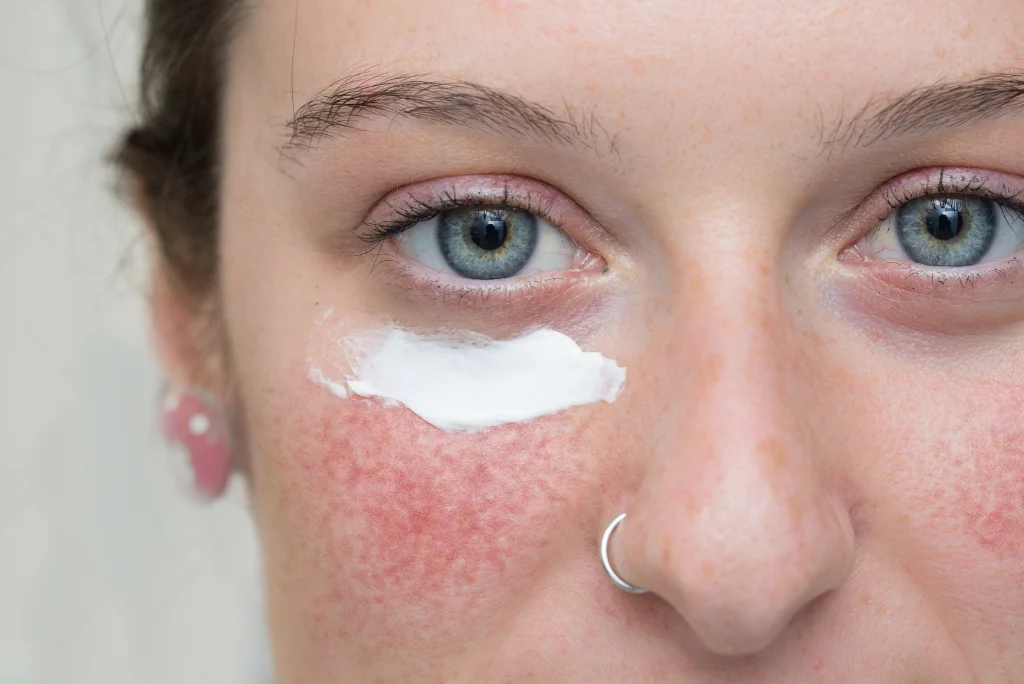
1. Redness and swelling
What it looks like: pink or red skin and small raised bumps around each follicle, a little like goosebumps. The area may feel warm, like mild sunburn.
Why it happens: the heat from the laser causes a short inflammatory reaction around the follicle. This is a normal sign that the laser has reached the hair.
How to avoid or ease it:
- Apply a cool compress or soothing gel after the session.
- Avoid hot showers, saunas and heavy exercise for 24 to 48 hours.
- Expect it to settle within a few hours, or by the next day on sensitive areas.
2. Itching and small breakouts
What it looks like: itchy skin or small pimple-like spots in the treated area, a few days after the session.
Why it happens: irritated follicles can become blocked or mildly inflamed (folliculitis), especially when sweat, tight clothing or heavy creams sit on freshly treated skin.
How to avoid it:
- Keep the area clean and dry, and wear loose clothing for a day or two.
- Avoid the gym and heavy, oily products for 48 hours.
- Do not scratch. If spots become painful or keep spreading, see your clinic.
3. Skin darkening (hyperpigmentation)
What it looks like: brown or darker patches in the treated area, appearing days or weeks after a session.
Why it happens: skin with more pigment reacts to heat by making even more pigment. This is the most common lasting side effect in brown skin, and it is more likely if the skin was tanned or exposed to the sun after treatment.
How to avoid it:
- Avoid sun and tanning for two weeks before and after each session.
- Use sunscreen every day on treated areas that are exposed.
- Choose a clinic that uses a laser suited to brown skin and does a patch test.
- Most darkening fades over weeks to months. A doctor can speed this up with suitable creams or peels.
4. Skin lightening (hypopigmentation)
What it looks like: patches that are lighter than the surrounding skin.
Why it happens: the laser energy has damaged some of the cells that produce skin colour. It is much rarer than darkening and is usually linked to settings that are too strong for the skin type.
How to avoid it:
- Do not treat skin that is tanned or recently sunburnt.
- Make sure the settings are chosen by a doctor for your skin type, not a standard setting used for everyone.
- Lightening can take months to recover, so prevention matters most.
5. Burns and blisters
What it looks like: painful, very red skin, blisters or raw patches, sometimes in the shape of the laser tip.
Why it happens: the skin absorbed far more heat than it should, usually because it was tanned, the device did not suit the skin type, the cooling was inadequate, or the settings were too high.
How to avoid it:
- Always have a patch test before the first full session.
- Tell your clinic if you have been in the sun, used a self-tanner or started any new medication.
- Choose a doctor-led clinic with a medical laser that has built-in cooling.
- If a blister forms, do not burst it. Contact your clinic the same day.
6. Crusting and scabbing
What it looks like: small, thin crusts or scabs over some follicles, usually on areas with thick, dark hair.
Why it happens: minor surface damage from the heat. It is more likely where hair is dense, such as the underarms or bikini area.
How to avoid or manage it:
- Keep the area moisturised and let crusts fall away on their own.
- Do not pick or scrub, as this can leave dark marks or small scars.
- Avoid sun on the area until the skin has fully healed.
7. Increased hair growth (paradoxical hair growth)
What it looks like: new, thicker or darker hair growing near the treated area, most often on the face and neck.
Why it happens: the exact cause is not fully understood. It appears to be linked to low-energy heat stimulating nearby follicles rather than damaging them. It is uncommon, and is seen more often in people with darker skin, hormonal conditions such as PCOS, and with light-based devices rather than lasers.
How to avoid or manage it:
- Choose a medical laser and settings that are strong enough to treat the hair effectively.
- If you have PCOS or another hormonal condition, have it assessed and treated alongside the laser.
- If new growth appears, tell your clinic. It can usually be treated with further laser sessions at adjusted settings.
For more on hormone-related facial hair, read our guide to PCOS and facial hair.
Laser Hair Removal Side Effects on the Face vs the Body
| Face | Body | |
| Sensitivity | Higher, especially the upper lip and chin | Lower on arms and legs; higher on underarms and bikini line |
| Common reactions | Redness and swelling that may last a little longer | Redness, bumps and occasional crusting on dense hair |
| Specific risks | Paradoxical hair growth; darkening on sun-exposed skin | Folliculitis in areas that sweat; darkening on the underarms |
| Extra care | Daily sunscreen, no threading or waxing between sessions | Loose clothing, no gym for 48 hours |
If darkness in the underarms or other folds is part of your concern, our guides to dark underarms treatment and laser for dark areas explain the options.
Are There Long-Term Side Effects?
For most people, no. The laser light used for hair removal reaches only the hair follicle in the upper layers of the skin and does not travel deep into the body. There is no evidence that laser hair removal causes cancer or damages internal organs.
The long-term effects that can occur are the ones described above when something goes wrong: lasting darkening or lightening of the skin, or, rarely, scarring after a burn. These are uncommon when the treatment is planned and carried out by a medical team.
Who Is More at Risk of Side Effects?
Some people need extra care, a different laser or a delay before treatment. Speak to a doctor first if any of these apply to you:
| Situation | Why it matters |
| Recently tanned or sunburnt skin | Higher risk of burns and dark patches. Treatment is usually delayed. |
| Darker skin tone | Needs a laser and settings suited to brown skin. |
| Isotretinoin in the last 6 months | The skin heals more slowly and is more sensitive. |
| Medicines that make skin sensitive to light | Some antibiotics and other medicines raise the risk of a reaction. |
| History of keloids or dark marks after injury | Higher chance of scarring or lasting pigmentation. |
| Pregnancy or breastfeeding | Treatment is usually postponed, because there is little safety research during pregnancy. |
| PCOS or other hormonal conditions | More sessions may be needed, and paradoxical hair growth is more likely. |
Laser Hair Removal Aftercare: How to Prevent Side Effects
| Before your session | After your session |
| Avoid sun, tanning and self-tanners for 2 weeks. | Use sunscreen daily on treated areas that are exposed. |
| Shave 24 hours before. Do not wax, thread or pluck for 4 weeks. | Apply a cool compress or soothing gel if the skin feels warm. |
| Stop bleaching creams, retinol and exfoliating acids a few days before. | Avoid hot showers, saunas, swimming and the gym for 24 to 48 hours. |
| Tell your clinic about any new medicines or skin problems. | Skip deodorant on treated underarms and makeup on treated skin for 24 hours. |
| Arrive with clean skin, with no creams on the area. | Do not pick crusts or scratch bumps. Let them settle on their own. |
When to See a Doctor After Laser Hair Removal
Contact your clinic promptly if you notice any of the following:
- Blisters, raw patches or crusts that are spreading
- Redness, swelling or pain that is getting worse after 48 hours
- Pus, heat or signs of infection
- Dark or light patches that have not started to fade after a few weeks
- New, thicker hair growth near the treated area
Early treatment usually leads to a faster and better recovery, especially with burns and pigmentation changes.
Safe Laser Hair Removal at Le Lotus Clinique
At Le Lotus Clinique, every laser hair removal course is planned around your skin, not a standard setting.
- Doctor-led assessment: your skin type, hair type, medical history and medication are checked before treatment.
- Patch test first: so your settings are matched to how your skin actually reacts.
- Lasers suited to brown skin: chosen for the skin types we see most in Pakistan.
- Clear aftercare and follow-up: so any reaction is picked up and treated early.
Read what to expect from treatment in our guides to laser hair removal in Lahore and laser hair removal in Islamabad, or book a consultation to have your skin assessed.
Frequently Asked Questions
Is laser hair removal safe for the face?
Can laser hair removal darken your skin?
Does laser hair removal cause cancer?
Can I have laser hair removal during pregnancy?
How long does redness last after laser hair removal?
Is laser hair removal safe if I have PCOS?
Anti-wrinkle injections in Islamabad for forehead lines, frown lines and crow’s feet: 2026 prices, units per area, results and aftercare from Le Lotus Clinique.

Redness, darkening, burns and more: learn 7 laser hair removal side effects, why they happen and how to avoid them. Doctor-led laser at Le Lotus Clinique.
Laser hair removal in Lahore costs, how many sessions you need and when results show. Compare areas and prices, and book at Le Lotus Clinique Lahore.