

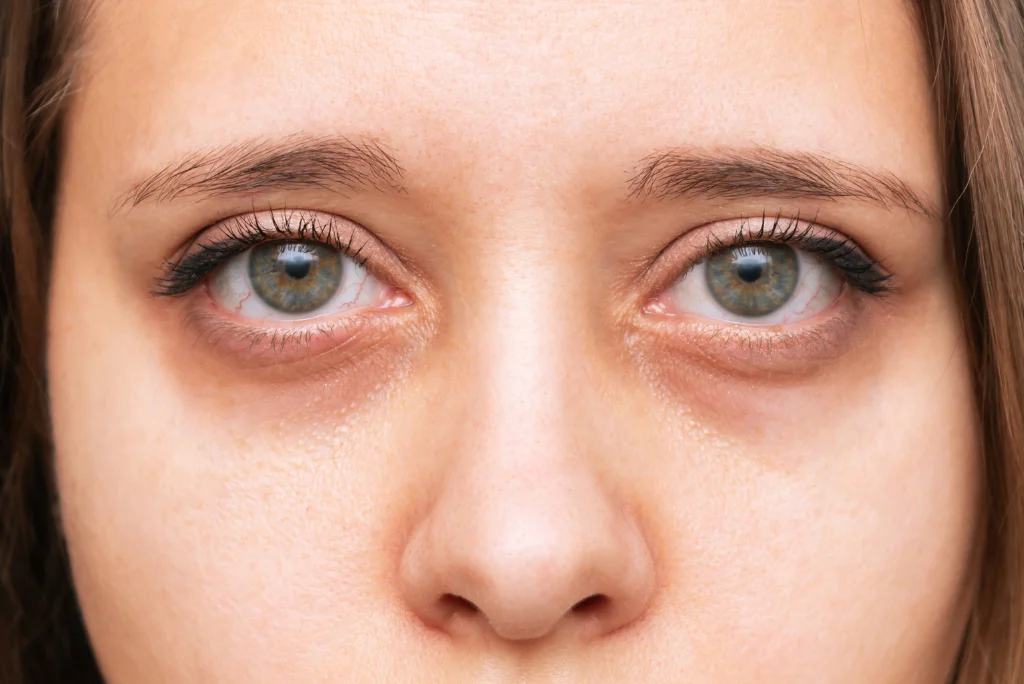
You slept eight hours. You drank the water. You bought the eye cream everyone on Instagram was talking about, used it religiously for two months, and the shadows under your eyes look exactly the same.
Here is why. Dark circles are not one condition. They are at least four different problems that happen to appear in the same place on the face, and the treatment for one does nothing at all for another. Most people never find out which type they have, so they spend years treating the wrong thing.
This article will help you work out which type you have in about thirty seconds, using two tests you can do at a mirror right now.
The two tests that tell you what you're dealing with
Go to a mirror with decent light. This takes less than a minute.
Test 1 – the stretch test. Place a finger on the dark area and gently stretch the skin sideways.
- The darkness stays the same → pigmented
- The darkness fades or disappears → vascular
Test 2 – the light test. Tilt your head back and look at the mirror from below, or shine a light directly onto your face from above.
- The darkness lightens noticeably or vanishes → structural, a shadow cast by a hollow rather than actual discolouration
- Nothing changes – not structural
Most people get a mixed result, which is normal. Combination dark circles are the most common presentation of all.
Type | Colour | What it actually is | Common in |
Pigmented | Brown, tan, coffee | Excess melanin in the thin skin around the eye | Very common in South Asian and Middle Eastern skin. Often runs in families |
Vascular | Blue, purple, pink | Blood vessels visible through skin that is thinner than skin anywhere else on the body | Fair skin, thin skin, allergy sufferers, people who sleep badly |
Structural | Grey, appears as a shadow | A hollow tear trough. There is no discolouration at all, only a shadow | Naturally deep-set eyes at any age, and most people from the mid-thirties onward |
Combination | Mixed | Two or three of the above together | The majority of patients |
The reason this matters so much: a brightening cream applied to a structural hollow is trying to lighten a shadow. There is nothing there to lighten. The skin is not dark. It is unlit.
Why they are so common in Pakistani skin
Two reasons, and neither is about sleep.
Melanin. Higher baseline melanin means the skin around the eyes darkens more readily in response to almost anything – rubbing, sun, inflammation, hormonal shifts. Periorbital hyperpigmentation is one of the most frequently reported cosmetic concerns across South Asian populations, and it is strongly hereditary. If your mother and your sisters have it, you very likely have the pigmented type.
Bone structure. Deeper-set eyes and a more prominent orbital rim are common features, and both cast more shadow. That produces dark circles in someone who has never had a single hour of poor sleep.
Neither of these is a health problem. Both are simply anatomy, and both respond to the right treatment and refuse to respond to the wrong one.
The lifestyle causes, honestly ranked
Every article on this topic opens with “get more sleep”. Sleep matters, but it is nowhere near the top of the list for most people. Here is a more honest ordering.
Genuinely significant:
- Rubbing your eyes. The single most underrated cause. Chronic rubbing drives inflammation, and inflammation drives pigment. If you have allergies and rub your eyes daily, treating the allergy will do more than any eye cream
- Allergies and chronic congestion. These dilate the small blood vessels under the eyes, making vascular circles darker. Very common in Lahore and Karachi through smog season
- Sun exposure. The under-eye area is rarely protected, and UV drives melanin production here as much as anywhere else
- Iron deficiency. Common in Pakistan, particularly among women. Low haemoglobin makes vascular circles noticeably darker
- Skin thins and fat pads descend, so vessels become more visible and hollows deepen. This starts earlier than most people expect
Real but modest:
- Poor sleep, which makes circles look worse temporarily rather than causing them
- Dehydration
- Screen time, mostly by causing eye strain and rubbing rather than through any direct effect
- Salt, which causes puffiness that casts a shadow
Barely relevant:
- Most of what social media claims
If you have iron deficiency or an untreated allergy, sorting that out is worth more than any product. It is also the one part of this that costs nothing to check.
Home remedies: what has some basis, and what causes damage
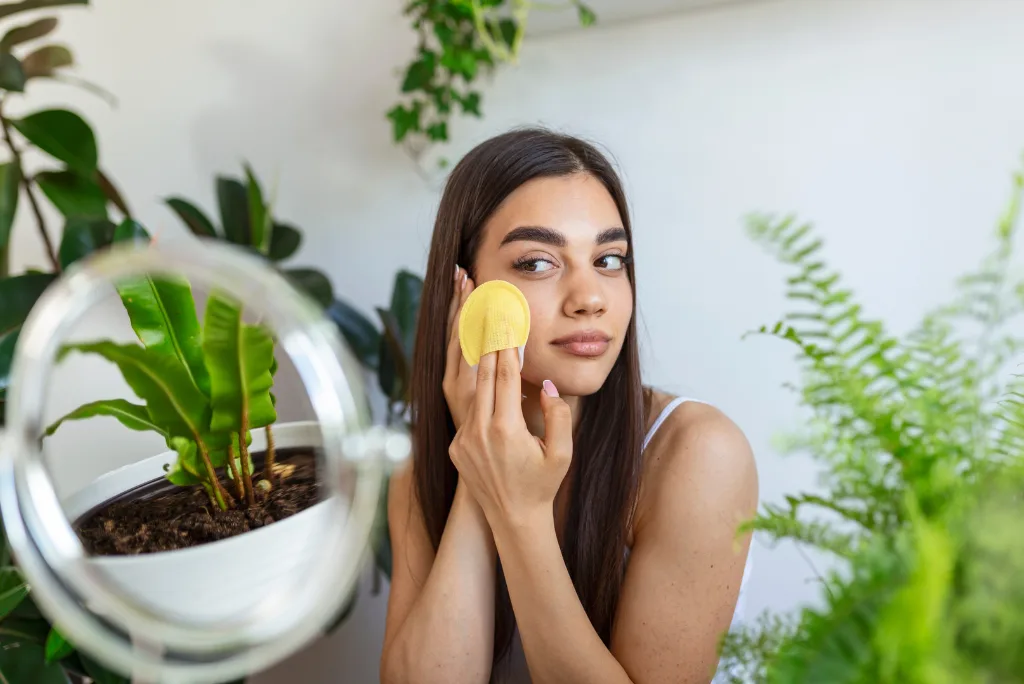
here is enormous search volume in Pakistan for home remedies here, so it is worth being direct about which do anything.
Remedy | Does it work? | Verdict |
Cold compress / chilled spoon | Yes, briefly | Constricts vessels and reduces puffiness for an hour or two. Genuinely useful before an event. Not a treatment |
Cucumber slices | Mildly | The benefit is the cooling and the moisture, not the cucumber. A cold damp cloth does the same |
Used tea bags (chilled) | Mildly | Caffeine constricts vessels and the cold helps. Same short-lived effect as a cold compress |
Potato slices | Very little | No meaningful evidence. Harmless |
Aloe vera | Mildly | Hydrates and soothes. Fine to use |
Almond oil massage | Mildly | Moisture helps the area look better. The massage may help more than the oil |
Lemon juice | No – avoid | Highly acidic, and phototoxic on sun exposure. On periorbital skin it commonly causes irritation and more pigmentation. One of the most frequently recommended remedies in Pakistan and one of the most harmful |
Baking soda, toothpaste, vinegar | No – avoid | Strips the skin barrier on the thinnest skin on the body |
Bleaching creams not meant for the eye area | No – avoid | Serious irritation risk, and often causes rebound darkening |
The pattern worth remembering: cold helps temporarily, acid causes harm, and nothing in a kitchen changes pigment or fills a hollow.
What eye creams can and cannot do
Eye creams are not useless. They are simply oversold, and they are the wrong tool for two of the four types.
Ingredients with genuine evidence:
- Vitamin C– brightens pigment gradually, supports collagen. Look for a stabilised formulation
- Niacinamide– reduces pigment transfer and strengthens the skin barrier. Well tolerated on delicate skin
- Retinol, at low strength– thickens the skin over time, which makes vessels less visible. Introduce slowly, two nights a week, and expect an adjustment period
- Caffeine– constricts vessels temporarily. Useful in the morning, not corrective
- Peptides– modest support for skin thickness
- Azelaic acid or kojic acid– for the pigmented type, though usually better under supervision near the eye
What no cream can do:
- Fill a hollow. A shadow is not a stain
- Meaningfully thicken skin enough to hide prominent vessels in a few months
- Change your bone structure or fat pad position
- Work at all if you are still rubbing your eyes daily
Realistic timeline for the pigmented type: twelve weeks minimum, with daily sunscreen. If you have been consistent for three months and see nothing, that is not a reason to buy a stronger cream. It is information telling you the cause is not pigment.
The same principles apply here as with pigmentation elsewhere on the face, which we covered in more detail in our guide on which pigmentation creams are worth using.
The step everyone skips: sunscreen under the eye
Most people stop applying sunscreen at the cheekbone. The under-eye skin is roughly a fifth the thickness of facial skin elsewhere and gets essentially no protection.
- Use a mineral or eye-safe SPF 30 to 50 right up to the lash line
- Tinted formulas are better for the pigmented type, since iron oxides block visible light as well as UV
- Sunglasses do real work here, both by blocking UV and by stopping you squinting
If your circles are pigmented and you are not doing this, nothing else will hold.
Clinic treatments, matched to the actual cause
This is where the diagnosis pays off. Each type has a different answer, and giving someone the wrong one is how people end up disappointed after spending real money.
If yours are pigmented
Pico laser breaks down pigment in extremely short pulses with minimal heat, which matters near the eye. Usually a short course of sessions.
Q-switch laser is well established for defined pigment and works well on the brown-toned circles common in South Asian skin.
Chemical peels formulated for pigmentation, at a strength appropriate for periorbital skin, often work as a first step and combine well with a prescribed topical.
If yours are vascular
Lasers aimed at pigment will not help, and topicals barely will. The goal is thickening the skin so vessels show less.
Sylfirm X targets vascular components specifically and stimulates collagen in the area, which is the closest thing to a purpose-built answer for this type.
Skin boosters and injectable hydration improve skin quality and thickness over a course. Our vitamin C drips and skin boosters are often used alongside in-clinic work.
If yours are structural
Tear trough filler is the one treatment that genuinely fixes this type, because it fills the hollow that casts the shadow. Results are visible immediately and typically last several months to a year.
It is also the treatment where technique matters most on the entire face. The under-eye area is unforgiving. Poorly placed filler causes lumps, a bluish tint, or prolonged puffiness, and it should only ever be done by an experienced injector using a cannula in a proper clinical setting. If a price seems remarkably low, that is usually the reason.
Endolift X is an option for tightening and mild lifting where the skin is lax as well as hollow.
Lower eyelid surgery becomes the appropriate route when fat pads have prominently descended and no non-surgical option will reach it.
If yours are combination
Which is most people. Usually a sequence rather than a single treatment: address the pigment first, then the structure, then maintain with topicals and sun protection.
Which treatment for which type, at a glance
Your type | What helps most | What will not help | Rough timeline |
Pigmented | Pico, Q-switch, peels, topicals, daily SPF | Filler, most home remedies | 8 to 12 weeks for topicals; a short course for laser |
Vascular | Sylfirm X, skin boosters, retinol over time, treating allergies | Pigment lasers, brightening creams | Gradual, over a course of sessions |
Structural | Tear trough filler, Endolift, surgery in advanced cases | Every cream ever made | Filler is visible immediately |
Combination | A staged plan combining the above | Any single-product approach | Several months |
When to see a doctor
Book an assessment if:
- The circles appeared suddenly or worsened quickly
- Only one eye is affected
- There is swelling, itching or watering alongside the darkness, which suggests an allergic cause worth treating first
- You feel constantly tired as well, which is worth an iron check
- You have tried a well-formulated cream properly for three months with sunscreen and seen nothing
- You are considering filler and want to know whether your circles are actually structural before spending anything
That last point is the practical one. Filler in someone whose circles are purely pigmented will not fix them, and a proper assessment costs a great deal less than the wrong treatment. You can book a skin assessment at your nearest branch if you want the type confirmed properly.
Final thoughts
The reason dark circles feel so stubborn is rarely that they are untreatable. It is that most people are treating the wrong one of four different problems, often for years, with a product category that was never going to work for their particular type.
Do the two mirror tests. Work out whether you are looking at pigment, vessels or a shadow. Stop rubbing your eyes, get your iron checked if you are tired as well, and put sunscreen right up to the lash line. Then choose a treatment that matches the cause instead of matching the advertising.
At Le Lotus Clinique, our dermatologists assess the under-eye area by type before recommending anything, because the plan for pigmented circles and the plan for a hollow tear trough have almost nothing in common. Consultations are available at our clinics in Islamabad, Lahore, Karachi, Rawalpindi, Multan and Peshawar.
Frequently Asked Questions
Does lemon juice help dark circles?
Is under-eye filler safe?
Can ice remove dark circles?
Do eye creams actually work?
Can dark circles go away on their own?
A derma roller costs less than a cup of coffee in most online stores here, which is exactly why I see the damage it causes
Almost every week someone sits across from me, pinches the fat above their waistband, and asks whether the freezing treatment they saw online will get

Let me clear something up before anything else. Dark underarms are not a hygiene problem. I say this at the start of almost every consultation,