
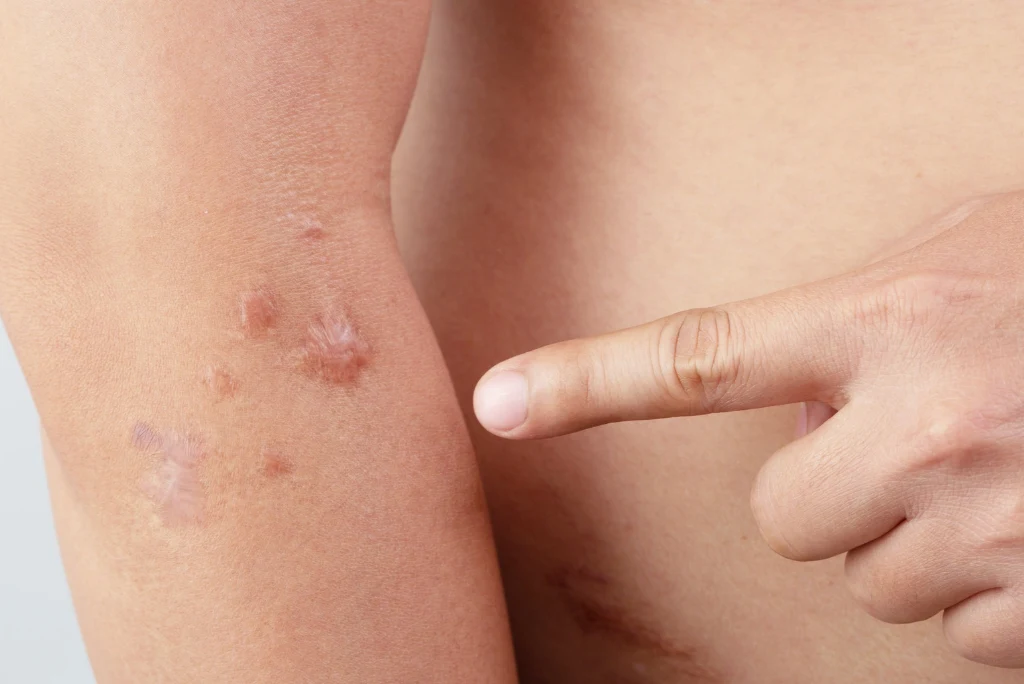
A patient came in last month with a raised scar on her earlobe from a piercing she had at fourteen. She had been told twice that it would settle on its own. Nine years later it was the size of a chickpea and still growing.
That scar was never going to settle, because it was a keloid. Hypertrophic scars do settle. Keloids do not. Almost everything that goes wrong in treating raised scars starts with confusing the two.
Quick summary: a hypertrophic scar stays inside the original wound and usually flattens within a year or two. A keloid grows past the wound edge and keeps going. Cutting a keloid out without follow-up treatment frequently produces a larger one. |
What Is a Keloid Scar?
When skin is injured, cells called fibroblasts lay down collagen to repair the gap. Normally they stop once the wound is closed. In a keloid they do not. Collagen production continues long after healing is complete, and the scar spreads into skin that was never injured.
That is the defining feature. A keloid outgrows its own wound.
They are typically firm, raised, shiny and darker or redder than the surrounding skin. Many itch. Some are tender or sore, particularly where clothing rubs. They can appear months after the original injury, which is why people often fail to connect the two.
Keloid or Hypertrophic Scar? How to Tell the Difference
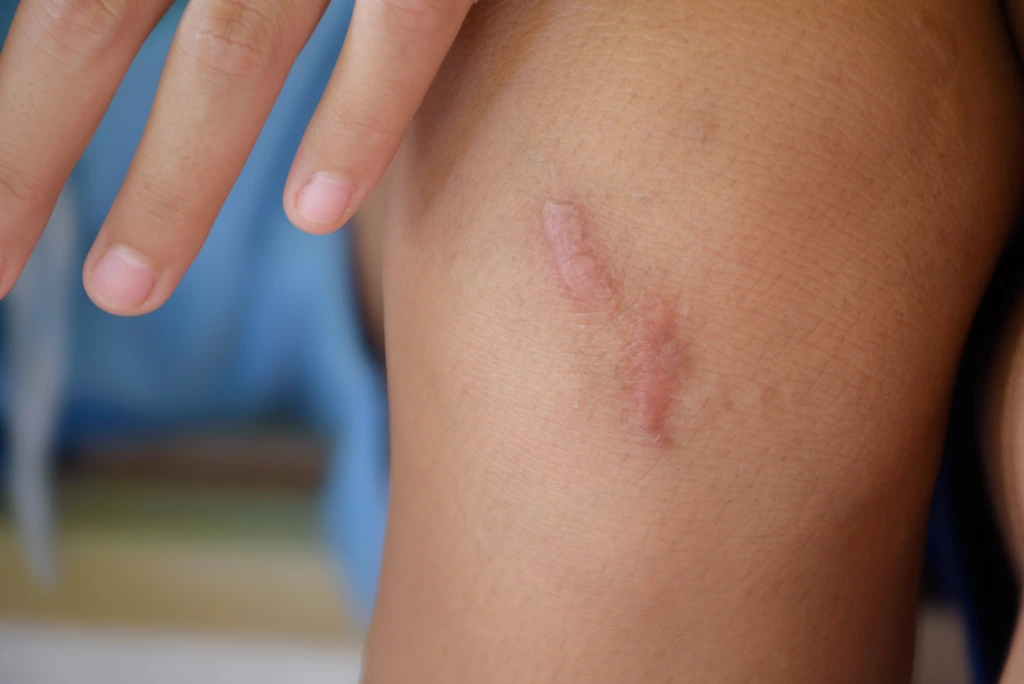
Hypertrophic scar | Keloid | |
Size | Stays within the original wound | Grows beyond the wound edge |
Timing | Appears within weeks | Can appear months later |
Natural course | Often flattens over one to two years | Does not resolve on its own |
Colour | Red, fading over time | Darker, red or purple, persistent |
Symptoms | Mild | Itching, tenderness, sometimes pain |
After removal | Low recurrence | Frequently recurs, often larger |
If your raised scar has stayed inside the line of the original cut, time and conservative care may be enough. If it has spread beyond it, waiting will not help.
Why Keloids Are More Common on Brown Skin
Keloids occur far more frequently on South Asian, African and Middle Eastern skin than on fair skin. The tendency runs in families, and if a close relative develops them, your own risk is considerably higher.
This matters because most information available online is written for populations where keloids are uncommon. Advice to simply wait and see, or to have a scar removed surgically, carries a very different risk here.
It also means prevention is worth taking seriously. If keloids run in your family, that is something to mention before any procedure, piercing or surgery, not afterwards.
Where Keloids Usually Form
Some areas are far more prone than others.
- Earlobes, after piercing. The most common presentation I see, and often in patients pierced as children
- Nose, after piercing, for the same reason
- Chest and shoulders, frequently following acne. This is the group most people do not expect
- Jawline and upper back, again often acne-related
- Surgical sites, including caesarean scars and any incision
Acne is the underrated trigger here. Inflamed spots on the chest, shoulders and jaw can leave keloids in people who never had a cut or a piercing. Treating active acne properly and early is genuine keloid prevention, not just skin clearing.
Why Cutting a Keloid Out Usually Makes It Worse
This is the single most important thing in this article.
Surgical removal on its own has a high recurrence rate. Cutting creates a fresh wound in skin that has already demonstrated it overproduces collagen, so the body responds the same way again, often across a larger area than before. People frequently end up with a keloid bigger than the one they started with.
That does not mean surgery is never appropriate. It means excision should be planned alongside follow-up treatment to suppress the regrowth, by a surgeon who knows the recurrence risk and has planned for it. Our plastic surgery team will tell you plainly whether a scar is suitable for removal and what the realistic recurrence risk looks like for your skin.
What you should never do is attempt removal at home. Tying thread around a keloid, cutting it, or burning it with acids and household products causes a worse scar and a serious infection risk.
What Keloid Scar Treatment Actually Involves
Standard first-line care for an active, growing keloid is medical rather than cosmetic. That usually means injections into the scar to soften and flatten it, often over several months, sometimes alongside silicone sheeting or pressure dressings. These are assessed and managed by a dermatologist, and they are the starting point for most cases.
Aesthetic treatment has a real role once the scar is stable or flattened, and for the marks it leaves behind.
Scar texture and surface. CO2 fractional laser resurfaces the skin and stimulates remodelling, which improves the texture of flattened scar tissue. Sylfirm X and Scarlet RF deliver radiofrequency at depth to remodel collagen with less surface trauma, which matters on skin already prone to overreacting.
The pigmentation around the scar. This is a frequent complaint and rarely addressed. Keloids often leave darker skin around and over them long after the raised tissue has settled. Pico laser and Q-switch laser both work on that pigment, and a chemical peel for skin refinement can improve surrounding tone.
Timing is everything. Resurfacing an active, growing keloid can aggravate it. Assessment first, treatment second.
What Makes Keloids Worse
- Picking, squeezing or scratching. Each episode is fresh trauma on skin that scars badly
- Repeat piercing in the same place. If one piercing caused a keloid, another in the same site will usually do the same
- Home removal attempts. Thread, acids and over-the-counter removal products cause infection and larger scars
- Untreated acne in keloid-prone areas
- Ignoring early changes. A small keloid responds far better than a large one. Most patients wait years
- Sun exposure, which darkens the scar and the skin around it. Daily sun protectionover any scar makes a visible difference
How to Prevent a Keloid After Piercing or Surgery
Prevention works considerably better than treatment, and it is straightforward.
If you or a close relative has had a keloid, say so before any procedure. That one sentence changes how a surgeon plans an incision and whether a piercing is advisable at all.
Keep new wounds clean and avoid tension across the healing area. Do not pick at scabs. Watch the site for the first few months and seek advice at the first sign of thickening rather than waiting to see what happens, because early intervention is far more effective.
For ear piercings specifically, if one side has keloided, think carefully before piercing the other.
How Long Treatment Takes and What Results Look Like
Keloid treatment is measured in months, not weeks. Medical management typically runs over several months with repeat sessions, and aesthetic work on texture and pigment follows after that.
Be clear about what success means here. A good outcome is a scar that is flatter, softer, less itchy and closer in colour to the surrounding skin. It is not bare skin with no trace of a scar. Keloids cannot be erased, and any clinic suggesting otherwise is not being straight with you.
The scars that respond best are the ones treated early, which is the strongest argument for not waiting.
Final Thoughts
If you take one thing from this, make it the first step: find out what you actually have.
A hypertrophic scar that has stayed within its original boundary may improve with time and conservative care. A keloid that has spread past the wound will not, and the longer it is left, the harder it becomes to treat. Nine years is a long time to wait for something that was never going to settle.
Equally, do not rush into having it cut out. Removal without a plan for what follows is the most reliable way to end up with a larger scar than the one you started with.
At Le Lotus Clinique our dermatologists assess raised scars before recommending anything, and we will tell you honestly when a scar needs medical management first and when aesthetic treatment is appropriate. Consultations are available at our clinics in Islamabad, Lahore, Karachi, Rawalpindi, Multan and Peshawar, and you can book a skin assessment at any of them.
Frequently Asked Questions
Do keloid scars ever go away on their own?
Can a keloid be removed permanently?
Why did my keloid come back bigger after surgery?
Are keloids more common in Pakistani skin?
Can laser treatment remove a keloid?
A patient came in last month with a raised scar on her earlobe from a piercing she had at fourteen. She had been told twice

A woman in her late twenties came to us having spent four years threading her chin every ten days. She had tried three courses of
Someone comes in having read that microneedling fixes acne scars. They’ve seen the before-and-afters. Then they get quoted two very different prices for two things