


If your hair is thinning but you are not bald, here is the news most clinics will not lead with: you probably do not need a transplant yet. Thinning hair usually means your follicles are still alive, and follicles that are alive can often be revived.
This is exactly the stage where regenerative treatments such as PRP and exosome therapy do their best work for both men and women. This guide explains why hair thins, which non-surgical treatments genuinely help, what they cost in Pakistan, and how to tell when surgery really the only answer is.
Why Is Your Hair Thinning?
Before any treatment makes sense, the cause needs identifying, because different causes need different solutions. The most common reasons we see at consultation are:
- Genetics and hormones. Androgenetic alopecia, driven by a hormone called DHT, gradually shrinks follicles in a predictable pattern. This is the most common cause in both men and women.
- Stress-related shedding. Known as telogen effluvium, this diffuse shedding often follows illness, surgery, fever, or intense emotional stress, and typically appears two to three months after the trigger.
- Nutritional deficiencies. Low iron, vitamin D, and protein intake are frequent contributors, particularly in women.
- Post-pregnancy shedding. Very common, usually temporary, and often mistaken for permanent loss.
- Thyroid and other medical conditions. Hair is often the first place an underlying imbalance shows.
Some of these resolve on their own once the cause is addressed. Others progress steadily if ignored. This is why a scalp assessment comes before any treatment recommendation, and why buying products before a diagnosis often wastes money.
The Golden Rule: Thinning Means Your Follicles Are Still Alive
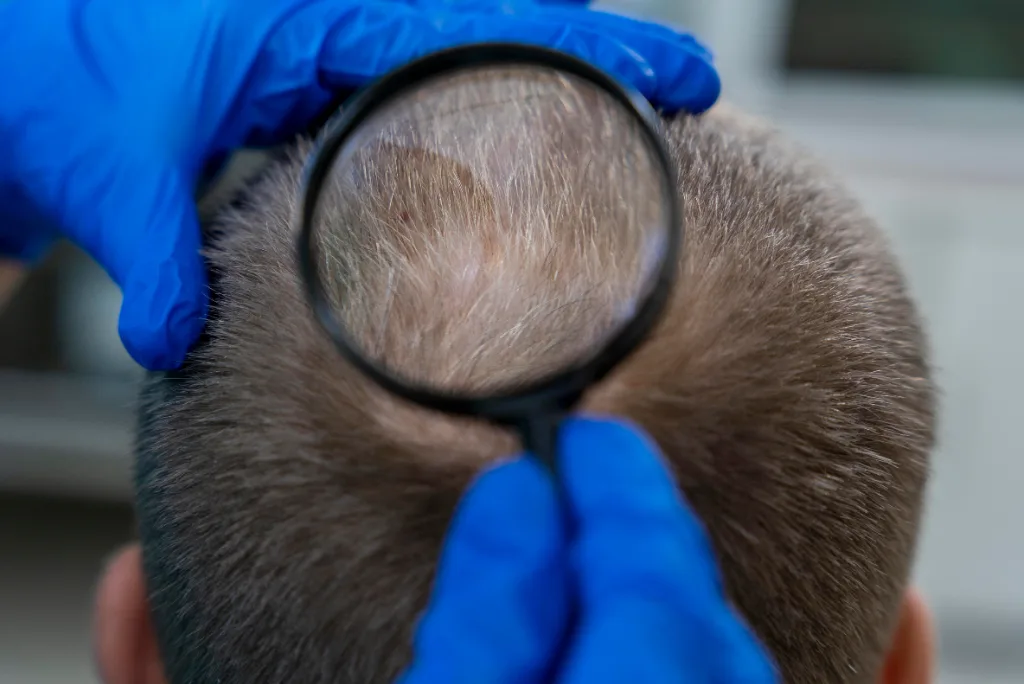
Hair loss is not an on/off switch. In pattern hair loss, follicles shrink gradually through a process called miniaturisation. In each growth cycle, the hair they produce becomes finer, shorter, and lighter, until eventually the follicle goes dormant.
Here is why this matters: a shrinking follicle can usually be stimulated back to producing thicker hair. A follicle that has been dormant for years often cannot.
This creates a window of opportunity. Act while your hair is thinning, and non-surgical treatments have real biology to work with. Wait until an area is completely smooth and shiny, and the realistic conversation shifts to transplantation. The single biggest mistake we see is patients waiting five years too long.
Can Thinning Hair Actually Grow Back?
Yes, if the follicles are miniaturised but still active. Treatments can extend the growth phase, improve blood supply, and push weak follicles to produce stronger hair.
Partially, if thinning is advanced. Density can improve visibly, though it may not return to what you had at twenty.
No, if follicles have died and the scalp is fully bald in that area. No injection, serum, or shampoo revives a dead follicle. Anyone promising otherwise is selling, not treating.
Results vary from person to person, which is precisely why an assessment beats guesswork.
PRP Therapy: Your Own Blood as a Hair Treatment
Platelet-rich plasma (PRP) therapy uses your own blood. A small sample is drawn, spun in a centrifuge to concentrate on the platelets, and the resulting plasma is injected into the thinning areas of the scalp.
Platelets carry growth factors, the signalling proteins your body uses for repair. Delivered into the scalp, they stimulate blood supply and nudge miniaturised follicles back towards a healthier growth cycle.
What to expect: an initial course of three to four sessions spaced about a month apart, followed by maintenance sessions once or twice a year. Visible improvement typically starts around the third month, first as reduced shedding, then as new density. The procedure takes under an hour with no real downtime.
Who it suits: early to moderate thinning in men and women, post-pregnancy shedding that is slow to recover, and patients who prefer a treatment derived entirely from their own body. We also use PRP therapy after hair transplants to support graft healing. Read our full guide to PRP hair treatment prices in Pakistan for a detailed cost breakdown.
Exosome Therapy: The Next Step Beyond PRP
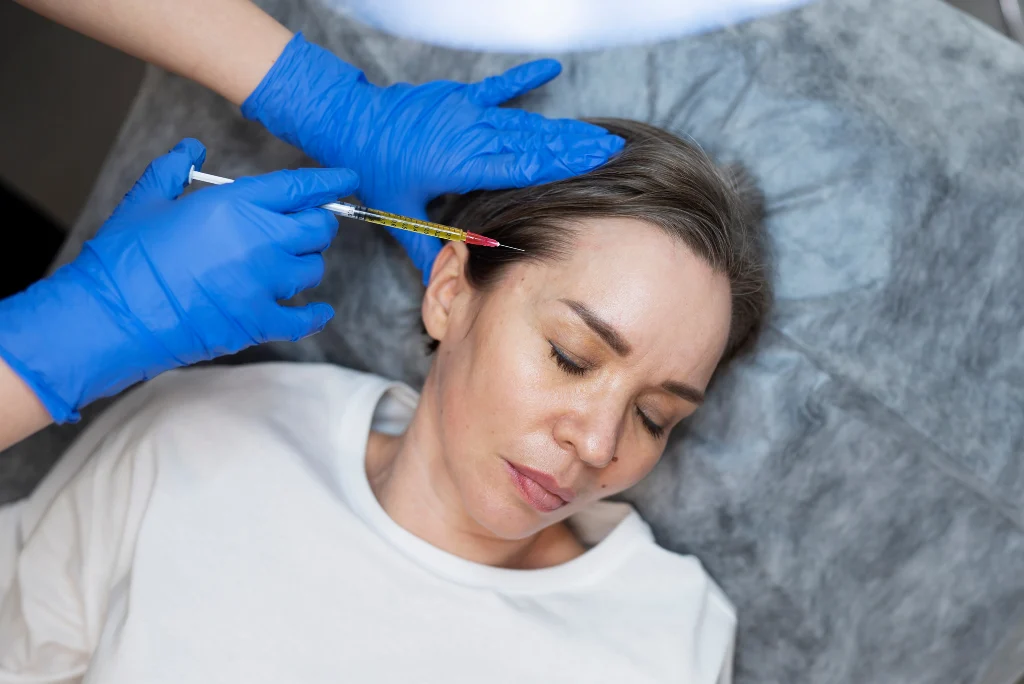
Exosome therapy is the newer of the two, and the one generating the most attention in regenerative hair medicine.
Exosomes are microscopic messenger particles derived from stem cells. Think of them as concentrated packets of growth signals. Where PRP delivers whatever growth factor concentration your own blood happens to contain on the day, exosome preparations deliver a consistent, highly concentrated dose of regenerative signals directly to struggling follicles.
What to expect: typically, one to three sessions depending on the degree of thinning, with results developing over three to six months. The treatment is applied to the scalp through fine injections or microneedling-assisted delivery, takes around an hour, and involves minimal downtime.
Who it suits: patients with moderate thinning who want a stronger push than PRP alone, those who responded only partially to PRP, and patients who want fewer sessions. Because the therapy is newer and the preparations are imported, it costs more per session than PRP.
One honest caveat: exosome therapy is promising, and early clinical results are encouraging, but it is a young field, and long-term data is still building. We tell patients this plainly, because a clinic that oversells a new treatment is a clinic to be careful with.
PRP vs Exosomes: Which Is Right for You?
| PRP Therapy | Exosome Therapy |
Source | Your own blood | Lab-prepared, stem cell derived |
Growth factor dose | Varies with your blood | Consistent and concentrated |
Typical course | 3 to 4 sessions, then maintenance | 1 to 3 sessions |
Downtime | Minimal | Minimal |
Best for | Early to moderate thinning | Moderate thinning, PRP non-responders |
Relative cost | Lower per session | Higher per session, fewer sessions |
Many patients get the best results from a combined plan, for example PRP as the foundation with exosomes to accelerate response in stubborn areas. The right choice depends on your scalp assessment, not on which treatment is trending.
What About Minoxidil and Finasteride?
No honest article on thinning hair can skip the medications, so here is the straight version.
Minoxidil (a topical solution or foam) improves blood flow to follicles and extends the growth phase. It works for many people, but only while you keep using it. Stop, and the hair sheds gained within months. It is suitable for both men and women.
Finasteride (a tablet) blocks DHT and is effective at slowing or stopping male pattern loss. It is not prescribed to women of childbearing age, and a small percentage of men experience side effects that lead them to stop.
Medications and clinic treatments are not rivals; they often work best together. A common plan pairs medication to protect existing hair with PRP or exosome sessions to rebuild density. What matters is that the plan is prescribed after a proper assessment rather than assembled from internet purchases.
Matching the Treatment to Your Stage of Thinning
Stage | What You See | Sensible First-Line Options |
Early | Wider parting, more hair in the brush, slight crown show-through | Address causes, medication if appropriate, PRP course |
Moderate | Visible scalp under light, noticeably reduced density | PRP or exosome therapy, often combined with medication |
Advanced | Clearly bald or nearly bald areas | Non-surgical treatments for surviving zones, hair transplant for bald zones |
If you are at the advanced stage, a hair transplant may genuinely be the right answer. Our hair transplant and restoration team can advise on whether surgery is appropriate during your consultation. But if you are reading this because your hair is thinning rather than gone, you likely have better and less invasive options first.
Thinning Hair in Women: A Different Approach
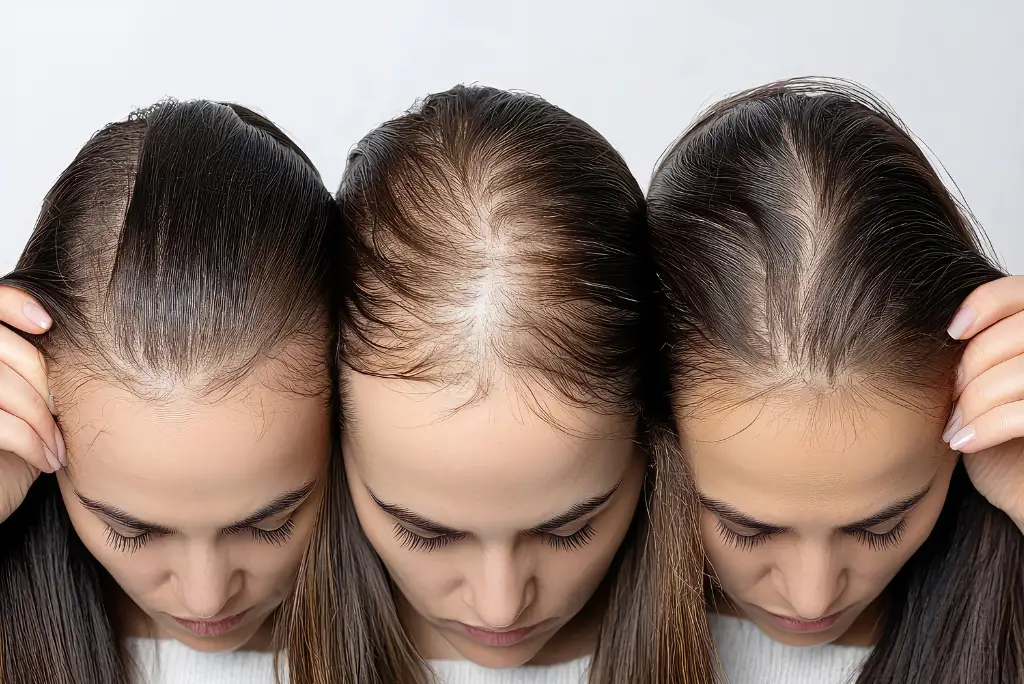
Female hair thinning deserves its own word, because most online advice is written for men and then half-heartedly adapted. Women usually thin diffusely across the crown and parting rather than receding at the hairline, and the causes are more often mixed: hormonal shifts, iron deficiency, thyroid issues, post-pregnancy shedding, and genetics together. Finasteride is generally off the table, which makes regenerative options more central rather than less.
The good news is that women often respond very well to PRP and exosome therapy, precisely because female thinning tends to involve miniaturised rather than dead follicles. A blood workup alongside the scalp assessment is standard for our female patients, because treating the scalp while ignoring an iron deficiency treats half the problem.
What Do These Treatments Cost in Pakistan?
As a general 2026 picture across major Pakistani cities:
PRP therapy: roughly PKR 8,000 to 25,000 per session depending on the clinic and preparation method, with a starter course of three to four sessions.
Exosome therapy: roughly PKR 35,000 to 90,000 per session depending on the preparation used, with one to three sessions typically needed.
Treat very cheap PRP offers with the same caution as very cheap transplants. Proper preparation requires a quality centrifuge, correct concentration protocols, and sterile technique. A session priced suspiciously low is usually cutting corners. Exact pricing is confirmed at consultation once your plan is mapped.
What to Expect at Le Lotus Clinique
At Le Lotus Clinique, thinning hair consultations are led by our hair restoration team under the oversight of Dr. Jawad Haider, MBBS, DA, with branches serving Islamabad, Rawalpindi, Lahore, Karachi, Peshawar, and Multan.
Your visit starts with a scalp and hair assessment to establish what is actually causing the thinning and how far it has progressed. From there, you get an honest recommendation, which may be PRP therapy, exosome therapy, medication, blood tests, a combination, or in some cases simply monitoring. If a hair transplant is genuinely the better path, we will say so and explain why.
Real before and after results from our hair restoration patients are available to view during your consultation at any Le Lotus Clinique branch.
If your parting is widening or the crown is showing through and you want to know where you stand, book your free scalp assessment at Le Lotus Clinique by calling 0318-5457381, WhatsApping our team, or booking online at lelotus.pk/appointment/. The earlier you act, the more of your hair we can save.
Final Thoughts
Thinning hair is a warning, not a verdict. If you act while your follicles are still alive, non-surgical treatments such as PRP and exosome therapy can slow the loss and rebuild real density, without a scalpel involved. The worst strategy is waiting, because the window where these treatments work does not stay open forever.
Get your scalp assessed, understand your cause and stage, and choose a plan built on your biology rather than a trending product. Book a consultation at Le Lotus Clinique or message our team on WhatsApp at 0318-5457381, and we will tell you honestly where you stand and what will actually help.
Frequently Asked Questions
Can thinning hair become thick again?
How many sessions of PRP or exosomes will I need?
Are the injections painful?
How long do the results last?
Is exosome therapy safe?
When is a hair transplant unavoidable?
Someone comes in having read that microneedling fixes acne scars. They’ve seen the before-and-afters. Then they get quoted two very different prices for two things
A woman came in last month with a shopping bag. Inside it were seven bottles: two biotin brands, a multivitamin, collagen powder, an imported hair

There is a bottle of sunscreen in your bathroom drawer right now. You bought it after someone told you to. You wore it for about