
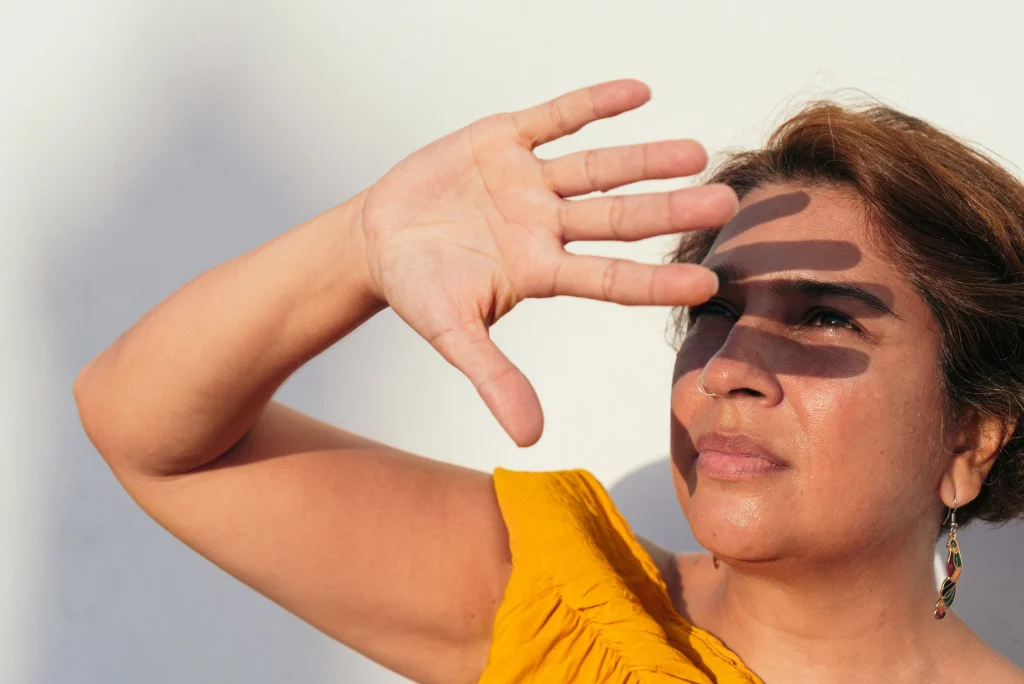
Every year from about April onwards, my consultation rooms fill with the same sentence: I have gone so dark this summer. Almost always the person has been using the word tan to describe three or four different things at once, and some of those things will fade by themselves while others will sit there for years.
Knowing which is which saves people a great deal of money. So let me separate them properly, with particular attention to what sun does to brown skin, which behaves differently from the skin most international advice is written for.
Is It a Tan or Is It Sun Damage? How to Tell the Difference
A tan is your skin working correctly. Ultraviolet light hits the skin, melanocytes produce more melanin, and that melanin spreads out to shield the DNA in the cells underneath. It is a defence response, and when the exposure stops, the response winds down.
Sun damage is what accumulates underneath while that is happening. It is not a colour change you can wait out. It is structural: broken collagen, thickened patches, scattered pigment that no longer switches off, and vessels that stay visible.
The quick test I give patients: cover the area for six to eight weeks with genuine protection. Whatever lifts was a tan. Whatever is still sitting there in the same shape and the same place was never a tan at all. |
What Fades on Its Own, and What Does Not
Here is the split I draw for patients, and it is the whole article in one table.
What you are seeing | Fades by itself? | Realistic timeline |
Even, overall darkening after sun exposure | Yes | Six to twelve weeks with proper protection |
Darker marks left by spots or shaving | Slowly | Three to eighteen months, longer on deeper tones |
Small defined brown spots on face or hands | No | These are sun spots. They need treating |
Patchy brown or grey-brown across cheeks, forehead, upper lip | No | Suggests melasma. Needs managing, not scrubbing |
Rough, thickened or leathery texture | No | Structural change. Resurfacing territory |
Fine lines, crepey skin, loss of firmness | No | Collagen loss. Needs collagen stimulation |
Persistent redness or visible vessels | No | Vascular, needs a different device entirely |
Most people arrive asking about row one and are actually dealing with rows three to six. That gap is the whole reason tan removal products disappoint.
Why Does Brown Skin Tan Faster but Burn Less?
This is the part that international skincare advice consistently gets wrong for us.
Higher baseline melanin gives Fitzpatrick types IV to VI real protection against burning. What it does not give is protection against pigment disorders. Our melanocytes are more reactive, so they respond to any provocation by producing pigment, and they are slower to switch that response off.
Three consequences follow, and they matter:
- We pigment where lighter skin would redden. A reaction that would leave someone else pink for two days leaves us with a brown mark for months.
- Visible light and heat drive pigment, not just UV. This is well documented on darker skin, and it is why ordinary UV-only protection underperforms here. Tinted protection containing iron oxides blocks visible light and does measurably better for melasma and stubborn pigmentation.
- Heat alone is a trigger. Standing over a stove, a long commute in traffic, a hot kitchen in summer. Patients who are careful about sun and still see their pigmentation worsen are usually getting it from heat.
What Actually Removes Sun Damage? Treatments Compared
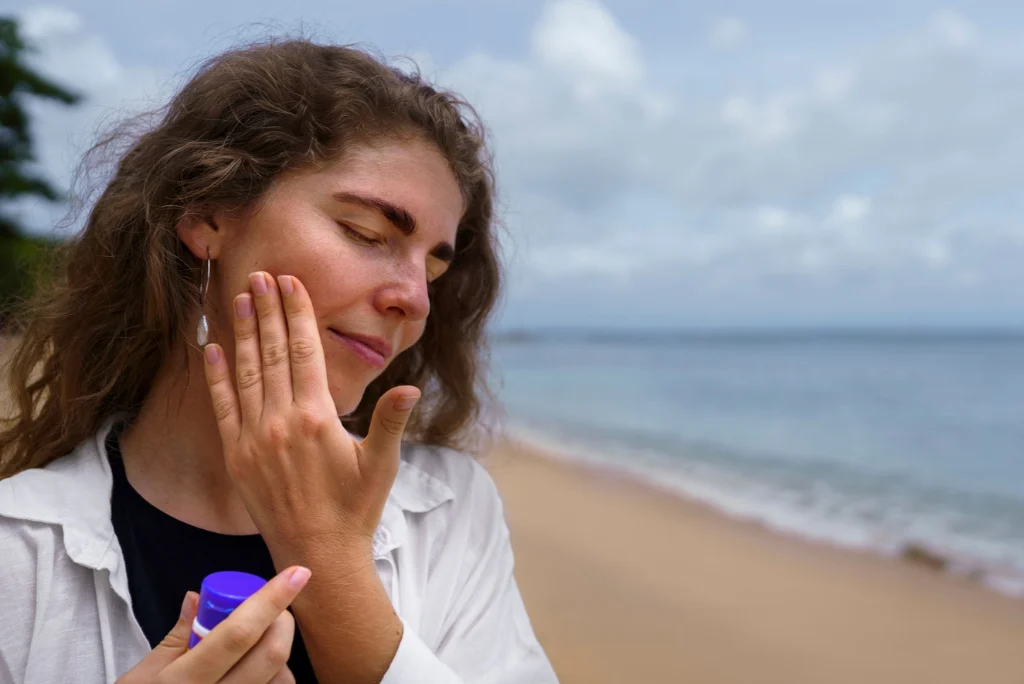
Different damage needs different tools. Treating all of it as a colour problem is why results disappoint.
Concern | Suited to | Why |
Even tan, dullness | Patience plus protection, or a gentle hydra facial | It is already resolving. Do not use heat on it |
Uneven tone, surface pigment | Chemical peels for pigmentation | Controlled exfoliation, gradual, well tolerated on brown skin |
Defined sun spots | Q-switch or pico laser | Targets pigment precisely with less heat to surrounding skin |
Melasma pattern | Managed approach, gentlest settings | Aggressive heat makes melasma worse. This is the key distinction |
Texture, thickening, fine lines | Fractional CO2 resurfacing | Addresses structure, not colour |
Laxity with pigment | Sylfirm X or Scarlet RF | Works on both without the heat load of ablative lasers |
Service pages: Hydra Facials, Chemical Peels for Pigmentation, Q-Switch Laser, Pico Laser, Fractional CO2, Sylfirm X and Scarlet RF
Notice the melasma row. Of everything on this page, this is the point I most want you to take away. Melasma looks like stubborn sun damage and gets treated like stubborn sun damage, with stronger and stronger lasers, and it reliably rebounds darker. If your pigmentation is patchy, symmetrical across both cheeks, and worsens every summer, it needs assessing before anything is aimed at it.
What Makes Sun Damage Worse Without You Noticing?
- Sunscreen applied once in the morning. Protection fades. Reapplication through the day is what makes it work, not the number on the bottle.
- Skipping it indoors and in the car. Window glass stops some UVB and very little UVA. Pakistani commutes are long.
- Aggressive scrubbing and home bleaching. Both cause inflammation, and on our skin inflammation becomes pigment. You darken the thing you are trying to lighten.
- Treating melasma like a tan. Covered above, and worth repeating.
- Stopping treatment the moment it improves. Pigmentation is managed rather than cured. Maintenance is the difference between a result that holds and one that returns by August.
If you want the prevention side properly, I wrote a separate piece on choosing a sunscreen you will actually wear, which matters more than anything in this article.
How We Assess Sun Damage Before Treating It
The assessment is short but it changes the plan completely.
- Identify the pattern. Diffuse, spotted, or symmetrical patches. Each points somewhere different.
- Establish the depth. Surface pigment responds to gentler work. Deeper pigment needs a different approach and a longer timeline.
- Rule out melasma and drug-related pigmentation before considering any device.
- Check the history. Pregnancy, hormonal treatment, thyroid issues and certain medications all change what we should use.
- Agree the baseline. The target is restoring your own natural tone, not going lighter than the skin you have. Anyone promising you several shades is selling something I would not.
Final Thoughts
If your skin has darkened evenly over a summer, that is a tan, and good protection will do most of the work for free. If you are looking at defined spots, patchy symmetrical pigmentation, rough texture or lines, none of that is going to fade on its own, and the treatment for each is genuinely different.
The expensive mistake is treating all of it as one problem. The second most expensive is treating melasma with heat.
At Le Lotus Clinique our pigmentation consultations across Islamabad, Lahore, Karachi, Multan, Peshawar and Rawalpindi begin by working out which of these you actually have, because on brown skin the wrong treatment does not simply fail, it can set you back months. You can book an assessment at the branch nearest you, or read more about our pigmentation and skin treatments.
Frequently Asked Questions
How long does a tan take to fade in Pakistan?
Can sun damage be reversed completely?
Is laser safe for sun damage on brown skin?
Does vitamin C or a whitening drip remove a tan?
Why does my pigmentation come back every summer?
Every year from about April onwards, my consultation rooms fill with the same sentence: I have gone so dark this summer. Almost always the person
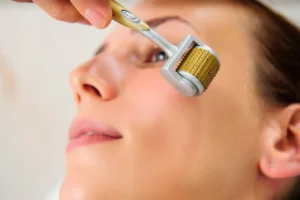
A derma roller costs less than a cup of coffee in most online stores here, which is exactly why I see the damage it causes
Almost every week someone sits across from me, pinches the fat above their waistband, and asks whether the freezing treatment they saw online will get