

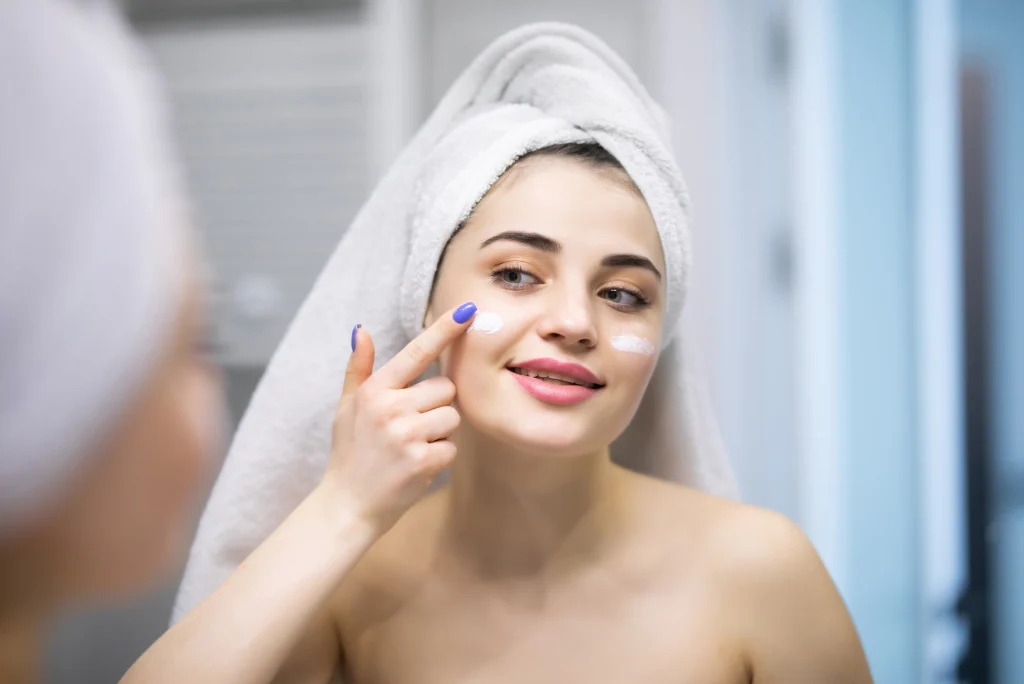
There is a moment most people in Pakistan will recognise. You are standing at a pharmacy counter, you point at the dark patches on your cheeks, and the man behind the counter reaches for a tube without asking a single question. No skin examination. No idea how long you have had it. He has sold that tube fifty times this week.
Sometimes it works. Often it works for about three weeks and then something goes wrong.
So this article is not a shopping list. It is an explanation of what pigmentation creams can genuinely do, which ingredients have evidence behind them, why one whole category of cream sold across Pakistani pharmacies causes more damage than it fixes, and how to tell when a cream was never going to be the answer for your particular skin.
First, work out which pigmentation you actually have
This is the step almost everyone skips, and it decides everything that follows. The same cream on two different types of pigmentation gives two completely different outcomes.
Type | What it looks like | Usually caused by | How creams perform |
Melasma | Symmetrical brown or greyish patches, mostly on cheeks, forehead and upper lip | Hormones, pregnancy, contraceptives, sun, heat | Poorly on deep melasma, moderately on surface melasma. Relapses easily |
Post-inflammatory hyperpigmentation | Flat dark marks left exactly where a pimple, cut or reaction was | Acne, eczema, waxing, aggressive facials, burns | Responds well. Often the best-case scenario for a cream |
Sun spots and uneven tone | Scattered brown spots on cheekbones, nose, forearms, hands | Years of cumulative UV exposure | Responds slowly but steadily, provided sunscreen is used |
Freckles | Small light-brown spots that darken in summer | Genetic, sun-triggered | Creams do very little. These need light-based treatment or nothing at all |
Two of these respond to creams. Two do not, or only partly. If you have been using a cream for four months on melasma and seeing nothing, the problem may not be the cream. It may be that the pigment sits deeper in the skin than any topical product can reach.
The other thing worth knowing: melasma frequently sits at two depths at once. The surface layer lightens with a cream and the deeper layer does not, which is why so many people describe their pigmentation as “half gone and then stuck”. That is not a failure of the product. That is the limit of what topical treatment does. There is more detail on this in our guide to melasma treatment in Pakistan, and on flat marks left behind by acne in our article on how dark spots form and how they are treated.
What is actually inside a pigmentation cream
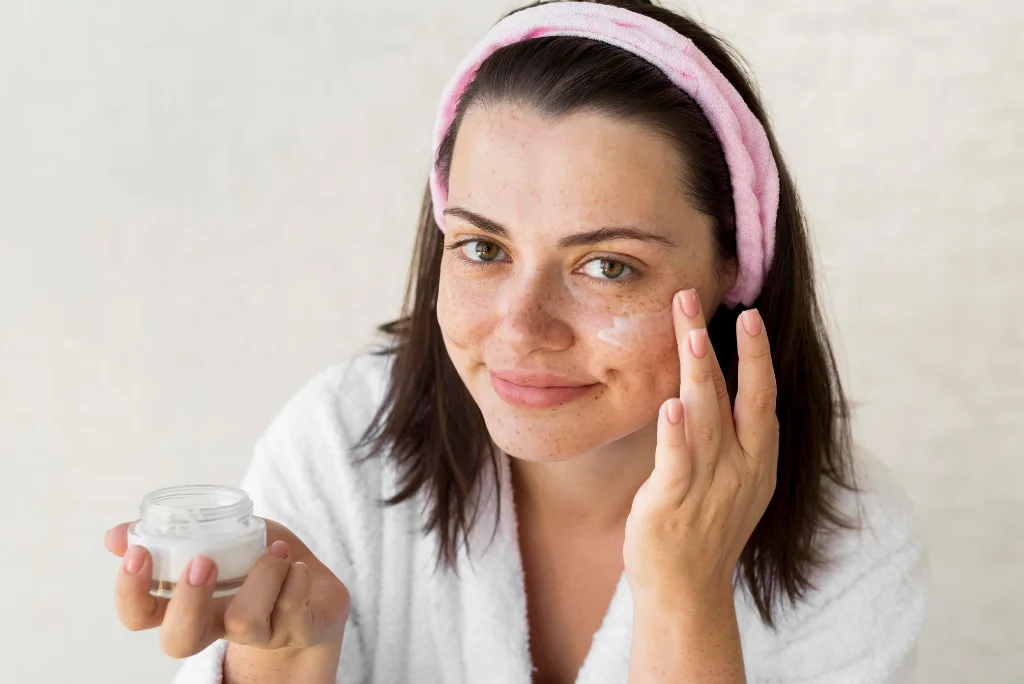
Strip away the packaging and almost every pigmentation product in Pakistan is built on the same handful of active ingredients. It is worth knowing them by name, because that is how you judge a cream regardless of what the box claims.
Hydroquinone
The most effective single ingredient there is, and the most misused. It blocks the enzyme your skin uses to make pigment.
- Typical prescription strength is 2% to 4%
- First visible change at six to eight weeks
- Should be used in cycles, not indefinitely, under supervision. Continuous long-term use can cause a stubborn blue-grey discolouration that is very difficult to reverse
Tranexamic acid
The most useful development in melasma care in recent years. It works on the blood-vessel and inflammation side of pigment production rather than just blocking the enzyme.
- Available topically, and orally on prescription
- Eight to twelve weeks for meaningful change
- Well tolerated, and it pairs well with almost everything else. Oral use needs medical screening first
Azelaic acid
Quietly one of the better options, especially if acne and pigmentation arrived together.
- Usually 10% to 20%
- Anti-inflammatory as well as brightening, so it treats the acne and the mark it leaves
- Safe in pregnancy, which matters because pregnancy is when a lot of melasma starts
Kojic acid
Gentler and more forgiving than hydroquinone. Common in cosmetic brightening products.
- Modest results used alone
- Better as part of a combination
- Can irritate sensitive skin at higher concentrations
Alpha arbutin
A slow-release relative of hydroquinone, much gentler.
- Very low irritation
- Genuinely slow. Three months minimum
- A good maintenance ingredient rather than a corrective one
Niacinamide
Not a pigment blocker. It stops pigment being transferred into the surface skin cells.
- Works best alongside something else
- Also repairs the skin barrier, which is why it helps skin that has been damaged by a harsh cream
- Almost nobody reacts badly to it
Retinoids
They do not lighten pigment directly. They speed up cell turnover so pigmented cells shed faster, and they help other ingredients penetrate.
- Expect an adjustment period of dryness and flaking
- Night use only
- Not to be used in pregnancy
Ingredient | Strength of evidence | Speed | Best suited to |
Hydroquinone | Strongest | Faster | Melasma, stubborn spots, short supervised courses |
Tranexamic acid | Strong and growing | Moderate | Melasma, particularly recurrent cases |
Azelaic acid | Strong | Moderate | Acne marks, pigmentation in pregnancy |
Retinoids | Strong, indirect | Slow | Overall tone, supporting other actives |
Niacinamide | Moderate | Slow | Maintenance, sensitive and damaged skin |
Kojic acid | Moderate | Slow | Mild unevenness |
Alpha arbutin | Moderate | Slow | Long-term maintenance |
The four kinds of pigmentation cream sold in Pakistan
Rather than name products, it is more useful to sort them into categories, because the category tells you almost everything about what will happen.
Category | Typically contains | Where it is sold | Realistic outcome | The catch |
Cosmetic brightening creams | Niacinamide, vitamin C, alpha arbutin, licorice extract | Beauty stores, supermarkets, online | Mild, gradual, surface only | Slow. Fine for maintaining results, not for correcting real melasma |
Over-the-counter combination creams | A steroid plus hydroquinone plus an antibiotic | Pharmacy counters, usually handed over without a prescription | Fast and dramatic for two to four weeks | This is the category the warning below is about |
Dermatologist-prescribed formulations | Hydroquinone, tretinoin, azelaic acid or tranexamic acid at controlled strengths | Prescription, with follow-up | Real improvement over eight to twelve weeks | Requires supervision and a planned stop date |
Herbal and 7-day whitening products | Rarely disclosed | Instagram sellers, unregulated importers | Unpredictable | No ingredient list means there is no way to judge safety, and mercury and steroids have both been found in products of this kind |
A word on the fast-acting ones Many combination creams sold over the counter in Pakistan contain a potent topical steroid. The steroid is why the skin looks brighter within two weeks. It is also why the skin thins, why fine blood vessels start showing through, and why the pigmentation returns darker than it started once you stop. Steroid-induced rebound pigmentation is one of the most common presentations we see, and it is consistently harder to treat than whatever the patient came in with originally. If a cream is producing dramatic results in under three weeks and nobody has told you when to stop using it, that is the thing to ask about before you buy the next tube. — Dr. Jawad Haider |
The practical takeaway is not that pharmacy creams are all bad. It is that a cream working very fast is a warning sign rather than a good sign. Real pigment correction is slow. Anything that outruns that timeline is usually doing something else.
What Affects the Final Cost of Mounjaro Treatment?
Several factors determine how much you will actually spend on a Mounjaro treatment course in Pakistan:
Dosage progression: Most patients start at 2.5mg and gradually escalate. A 6-month treatment course will span multiple dose levels, each with its own cost.
Import costs and exchange rate: Mounjaro is imported and priced in USD at source. Any shift in the rupee directly affects retail pricing, which is why prices can change month to month.
Clinic overheads and package inclusions: Some clinics include dietary planning, follow-up consultations, and blood monitoring in their package cost. Others charge for these separately. Always ask what is included.
Authenticity of the medication: Licensed, cold-chain-verified Mounjaro from a reputable clinic will always cost more than an unverified source. That difference is not a premium. It is the cost of safety.
Treatment duration: Mounjaro is not a one-injection solution. Most patients require several months of consistent use combined with lifestyle changes to see meaningful and lasting results. The total treatment cost over a 3 to 6 month program is the more relevant figure than the per-pen price.
How long a cream actually takes
Expectations are where most pigmentation treatment fails, so here is the honest timeline.
- Weeks 1 to 3— nothing visible. Some people get mild dryness or irritation as the skin adjusts
- Weeks 4 to 8— the first genuine change. Usually the edges of the patches softening before the centre lightens
- Weeks 8 to 12— most of the improvement you are going to get from a topical product
- Beyond 12 weeks— a plateau. This is the point to reassess rather than push the strength higher
Most people give up somewhere in week five. Which is, frustratingly, right before the point where it starts working.
The other half of the timeline nobody mentions: stopping. Pigmentation that has responded to a cream will usually come back if the cream stops and nothing replaces it, particularly melasma, and particularly without daily sun protection. Treatment for pigmentation is closer to managing a long-term condition than fixing a one-off problem.
The step nearly everyone skips
Sunscreen is not the boring add-on at the end of the routine. In pigmentation treatment it does more work than the cream.
Pakistan’s UV index runs high for most of the year, and in Multan, Karachi and Lahore it stays punishing well past summer. Melasma is also triggered by heat and by visible light, not only UV, which is why standing over a stove or sitting near a window still counts.
What to look for:
- SPF 30 minimum, SPF 50 preferable
- Broad spectrum, so UVA is covered as well as UVB
- Tinted, if you have melasma. The iron oxides in tinted formulas block visible light, which clear sunscreens do not
- Reapplied every three to four hours on days you are outdoors
- Worn indoors too, if you sit near a window for hours
Without this, a cream is fighting something that reapplies itself every single day.
When a cream is not going to be enough
If you have used a properly formulated product with sun protection for three months and hit a wall, the pigment is probably sitting deeper than a topical can reach. That is the point where in-clinic options become relevant.
Pico laser
Delivers energy in extremely short pulses that shatter pigment particles without heating the surrounding skin much. The low heat matters for melasma, since heat is one of the things that triggers it. Usually a course of sessions spaced a few weeks apart. Best for stubborn pigment, sun spots and post-acne marks. More on Pico laser for pigmentation.
Q-switch laser
Well-established, effective on defined pigmented spots and uneven tone. Typically a course rather than a single visit, with the pigment darkening briefly before it clears. Best for sun spots, freckles and localised patches. More on Q-switch laser treatment.
Chemical peels
Controlled exfoliation using medical-grade acids, at a strength and depth chosen for your skin type. Often the most sensible first step in clinic, and frequently combined with a prescribed cream. Best for surface pigmentation, post-acne marks and overall dullness. More on chemical peels for pigmentation.
Sylfirm X
A newer approach that targets the vascular component of melasma, which is the part that most other treatments ignore. Worth discussing if melasma has come back repeatedly after everything else worked temporarily. More on Sylfirm X for stubborn melasma.
One caution. Lasers are not automatically the stronger option for melasma. Used at the wrong settings on the wrong skin type they can make it worse, which is why an assessment matters more here than in almost any other aesthetic treatment. A properly chosen peel often outperforms an aggressively chosen laser.
Cream versus clinic treatment, side by side
| Cream | In-clinic treatment |
Cost | [INSERT typical monthly cream spend] | [INSERT your per-session and package ranges] |
First visible change | 4 to 8 weeks | 1 to 3 sessions |
Works well on | Post-acne marks, surface pigmentation, mild unevenness | Deeper melasma, sun spots, freckles, resistant pigment |
Struggles with | Deep dermal melasma, freckles | Nothing, if correctly matched to the pigmentation type |
Main risk | Irritation, and rebound if the product contains a steroid | Temporary redness, and worsening if settings are wrong for the skin type |
Upkeep | Ongoing, with sun protection | Maintenance sessions plus a home routine |
Supervision | Should be supervised for anything prescription-strength | Always |
Most people do best on a combination. A course of in-clinic treatment to shift what the cream cannot reach, then a maintenance routine at home to hold the result. Our advanced whitening treatment options are usually planned that way, and a HydraFacial between sessions is often used to keep the skin comfortable during a course.
When to stop self-treating and see a dermatologist
Book an appointment if any of these apply:
- The pigmentation has darkened rather than lightened since starting a cream
- Patches appeared suddenly, or on one side of the face only
- The skin has become thin, shiny, red or is showing visible small blood vessels
- Pigmentation followed a burn, a procedure or a reaction to a product
- You have been using an over-the-counter combination cream for more than two months and nobody has told you when to stop
- Three months of consistent use has produced nothing
That last one is not a failure on your part. It is useful diagnostic information, and it usually means the pigment is deeper than a cream can work. You can book a skin assessment at your nearest branch to have it looked at properly.
Final thoughts
Pigmentation is one of the most treatable skin concerns there is, and one of the most commonly mishandled. The mishandling almost always comes from the same two places: using the wrong category of product for the type of pigmentation, and expecting in three weeks what honestly takes three months.
Start by identifying what you are dealing with. Use ingredients with evidence behind them rather than promises on packaging. Be suspicious of anything working dramatically fast. Wear sunscreen every day, indoors included. And if three months of doing all of that properly has not moved it, the answer is not a stronger cream.
At Le Lotus Clinique, our dermatologists assess pigmentation at both surface and deeper levels before recommending anything, because the treatment that works for post-acne marks is rarely the one that works for dermal melasma. Consultations are available across our clinics in Islamabad, Lahore, Karachi, Rawalpindi, Multan and Peshawar.
Frequently Asked Questions
Which cream is best for pigmentation in Pakistan?
Can pigmentation be removed permanently?
Is hydroquinone safe to use?
Why did my pigmentation come back darker after I stopped my cream?
Can I use a pigmentation cream during pregnancy?
You slept eight hours. You drank the water. You bought the eye cream everyone on Instagram was talking about, used it religiously for two months,
There is a moment most people in Pakistan will recognise. You are standing at a pharmacy counter, you point at the dark patches on your

Most people who come to us about weight have already followed a diet plan. Often several. They lost some weight, regained it, and concluded the