
Let me start with the thing that will annoy you.
Your pores don’t open and close. They never have. There’s no little muscle around them, no drawstring, nothing that tightens when you splash cold water on your face and nothing that loosens when you lean over a bowl of steam. A pore is just an opening. It’s the top of a tube with an oil gland sitting at the bottom of it, and it is roughly the size it’s going to be.
I know. Every product you’ve ever bought is built on the opposite idea.
But here’s the useful part. Pore size barely changes. Pore appearance changes constantly, and it changes for three specific reasons. Once you know which one is yours, this stops being a guessing game with a bathroom shelf full of half-used serums.
The short version: you can’t shrink the pore. You can empty it, you can turn down the oil filling it, and you can rebuild the collagen holding its walls apart. Three problems, three answers. Most people spend years treating only one of them. |
Three reasons a pore looks big
Most of the patients I see have two of these running at once. That’s precisely why one product never fixes it.
It’s producing a lot of oil. The pore is the mouth of a sebaceous gland. Big active gland, wide mouth. This is largely genetic, which is why it runs in families and why it’s always the nose, the forehead and the inner cheeks that are worst. Nothing you did caused this one.
It’s been clogged for years. Oil and dead skin pack in, the pore stretches around the plug, and after enough months of that it stops springing back. If you had bad acne in your twenties and now you have visible pores in your thirties, this is why. The acne left, the stretched openings stayed.
The collagen around it has gone. This is the one nobody talks about and the one I end up explaining most often. Your pores are held open-but-neat by the collagen scaffolding in the skin around them. Sun damage and age break that scaffolding down, the walls sag, and the opening gapes. It’s not a cleanliness problem at all. It’s a structural one.
Here’s a trick that costs nothing. Look at your face in a mirror while lying flat, then stand up and look again. If your pores looked noticeably better lying down, gravity just showed you that your problem is collagen. And if that’s your problem, no cleanser, no clay mask and no amount of scrubbing is going to touch it.
What you’re seeing | What’s causing it | What actually moves the needle |
Round pores, shiny by lunchtime | Oil production | Retinoids, oil control, in-clinic sebum work |
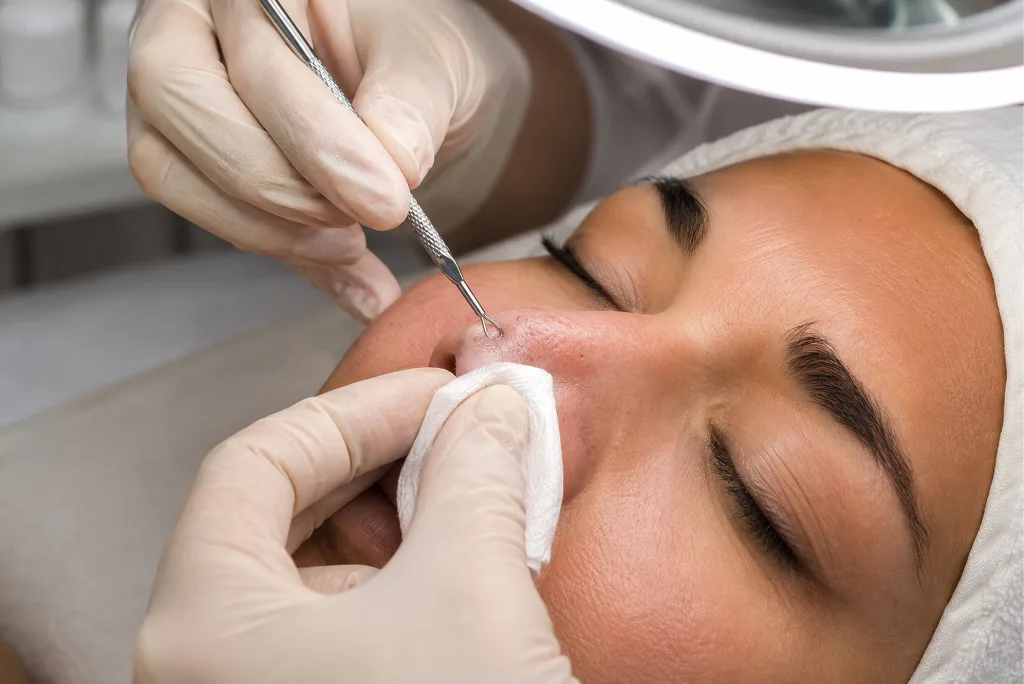
Dark dots, gritty texture | Clogging | Proper exfoliation, professional extraction |
Tear-shaped or drooping pores, crepey skin nearby | Collagen loss | Fractional laser, RF microneedling |
Honestly, all three | Combination | A sequence, not a product |
Why the advice you're reading doesn't quite fit
Most of the articles that rank for this were written in London or California. The skincare is fine. The context is wrong.
We have a high UV index here for most of the year, and UV wrecks collagen faster than anything else on the list. That means the third cause, the structural one, arrives earlier and harder in Pakistani skin than in the populations those articles were written for.
Heat and humidity push oil production up measurably. Ask anyone in Karachi whether their skin behaves the same in June as in January.
And then there’s smog. In Lahore, between roughly November and February, fine particulate matter settles into pores and oxidises with the sebum sitting there. It clogs and it darkens. I see a genuine seasonal pattern in Lahore patients that simply doesn’t exist in the international literature, and a routine that worked in September often stops working in December.
So if you’ve been following a very good American dermatologist on Instagram and getting nowhere, it may not be bad advice. It may just be advice aimed at a different set of conditions.
The serums: what's worth your money
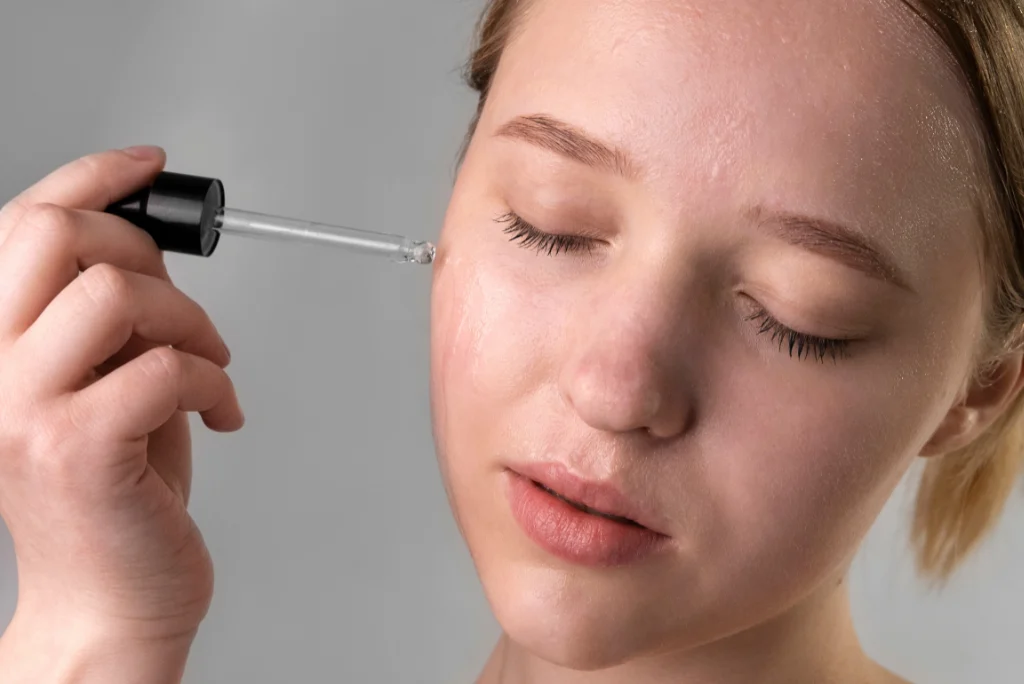
There’s a lot of search traffic in Pakistan for pore serums and most of it lands on listicles that never explain what the ingredient is doing. Let me just tell you.
Worth buying
Niacinamide, 4 to 10%.
The safest useful thing in this category. It calms oil production and gradually improves the skin’s quality around the pore. Almost nobody reacts badly to it. Give it eight to twelve weeks.
Salicylic acid, 0.5 to 2%.
This one is oil-soluble, which is the whole point – it gets down inside the pore instead of skating across the top the way glycolic does. If your pores look dark rather than wide, start here. Four to six weeks.
A retinoid.
If I could hand every patient one thing, it would be this. It stops the pore clogging in the first place and it builds collagen, so it’s the only topical that hits two of the three causes at once. It’s also the one people abandon fastest, because weeks two through four involve flaking and looking slightly worse. Push through it. Start twice a week, at night, and build up. Twelve weeks minimum before you judge it.
Azelaic acid.
Good if your pores and your acne showed up together.
Fine, but don’t expect much
Glycolic and lactic acids improve surface texture but don’t reach into the pore. Clay masks soak up oil for a day and feel lovely. Vitamin C helps collagen slowly and indirectly.
Save your money
Pore strips. These are the one product I’d happily see vanish. You rip the top off the plug, the root stays behind, and you get that satisfying little forest of spikes on the strip that convinces you it worked. It didn’t. Do it often enough and you stretch the opening permanently. You are, very slowly, causing the thing you’re trying to fix.
“Pore-tightening” toners. The tight feeling is alcohol drying your skin out. Your skin responds to being stripped by producing more oil, which is the opposite of what you wanted.
Primers. Nothing against them. They’re makeup. They change how the pore looks for eight hours and change nothing about the pore.
And the honest ceiling on all of it: three consistent months of the right serum will genuinely improve pores caused by oil and clogging. It will do something modest for collagen-related pores. It will never change the size of the opening, because nothing you rub on your skin can.
Multani mitti, ice, and the rest
These come up in every consultation, so they deserve real answers rather than a doctor rolling their eyes.
| Does it do anything? |
Multani mitti | Yes, actually – it genuinely absorbs surface oil and skin looks smoother and matte afterwards. No, it doesn’t shrink pores. And if you’re using it three or four times a week you’re over-drying your skin, which makes it produce more oil. Once a week is a nice thing to do for yourself. Daily is working against you |
Ice | The cold constricts the surrounding skin, so pores look smaller for about ten minutes. Useful before a wedding photo. Not a treatment |
Steaming | It softens the plug, which is why we do it before extractions. It does not open anything. Doing it at home too often just irritates your skin |
Besan, haldi, yoghurt | Gentle exfoliation, a bit of soothing. Harmless and pleasant. Not going to change much |
Lemon juice | Please don’t. It’s acidic, it’s phototoxic in our sun, and I see the pigmentation it causes regularly |
Toothpaste, baking soda | Don’t. You strip the barrier, the skin panics, the oil goes up |
Squeezing them yourself | The single most reliable way to permanently enlarge a pore. Also how you get the scar |
The pattern, if you want one: absorbing oil helps for a day, exfoliating helps for real, and anything harsh backfires by driving oil production up.
Four things, in order of how much they matter
Not a twelve-step routine. Nobody sticks to those anyway.
- Stop using a harsh face wash. This is the mistake I correct most often. Oily skin, squeaky-clean foaming cleanser twice a day, barrier destroyed, oil production up. Gentle cleanser. Twice. That’s it.
- Salicylic acid two or three nights a week, if you’re the clogged type.
- A retinoid at night. This is doing most of the work.
- Sunscreen every single morning. I know. You have oily skin and you hate how it feels. Use a gel or a fluid – they’re nothing like the thick creams you’re picturing. But understand what’s at stake: UV is the main reason that collagen scaffolding collapses, and collagen collapse causes the worst-looking pores of the three types. Skipping sunscreen while treating pores is like bailing out a boat without plugging the hole.
Do those four for three months before you conclude that nothing works.
When it's time to come in
If you’ve done all that properly and you’re still unhappy, the problem is almost always collagen, and that’s the point at which you need something that reaches deeper than a cream.
Clogged pores. A HydraFacial extracts with suction rather than someone’s fingers, which clears the pore without stretching it – that difference matters more than people realise. Chemical peels at clinical strength clear the lining properly; salicylic-based ones are excellent on oily congested skin. Both are maintenance rather than cure.
Oil production. Our anti-acne protocols go after sebum at the source, usually combining in-clinic work with something prescribed. Where acne and pores arrive together, treating the acne solves most of the pore problem as a side effect.
Collagen loss. CO2 fractional laser is the most effective option we have for this, and I’ll be straight with you about the trade-off: it works by causing controlled injury so the skin rebuilds, results arrive over months rather than days, and you’ll have several days of genuine downtime. If someone offers you dramatic pore results with no downtime and no course of sessions, be sceptical.
Sylfirm X and Scarlet RF sit in the middle – radiofrequency delivered through microneedles, less downtime, run as a course. Pico laser is worth considering when sun damage and pore visibility show up together, which around here is often.
One more thing worth saying: enlarged pores and shallow acne scars get confused constantly, including by people who have both. The treatments overlap but the plans differ, and it’s worth ten minutes with someone who can tell them apart.
Serums or clinic? Realistically, both
| Serums | Clinic |
Cost | Rs 1,500 – 5,000 a month | Rs 12,000 – 35,000 per session, usually a course of 3 to 6 |
First real change | 6 to 12 weeks | 1 to 3 sessions |
Genuinely good at | Oil, clogging, holding results | Collagen loss, texture, the stubborn cases |
Not going to fix | Structural pore change | Nothing, if it’s matched to the right cause |
Downtime | None | None to several days |
Ongoing | Daily, forever | Top-ups, plus the home routine |
Nearly everyone does best with both. The clinic work shifts what a cream can’t reach. The home routine is what stops it coming back.
Come and get it looked at if
- Three honest months of the routine above did nothing
- Your pores look tear-shaped or elongated rather than round
- There’s active acne alongside them
- You’re seeing dips and texture change, not just wide pores
- You’re about to book an expensive laser course and nobody has told you which of the three causes you actually have
That last one is the one I care about most. Booking a collagen laser when your problem is a clogged pore is an expensive way to solve something a peel would have handled in a fraction of the cost. Ten minutes of assessment prevents it. You can book a skin assessment at your nearest branch and we’ll tell you honestly which type you’re dealing with, including when the answer is “fix your routine first and come back in three months”.
Final thoughts
Enlarged pores might be the most heavily marketed and least well explained skin concern in this country. People spend steadily, month after month, on serums and toners and strips aimed at oil, while the actual cause is collagen loss that nothing in a bottle was ever going to reverse.
So: work out which of the three you have. Fix the basics before you add anything. Wear the sunscreen, because the worst pores I see are sun-damaged ones. And if three consistent months changed nothing, don’t take that as failure, take it as your answer.
At Le Lotus Clinique we assess pore enlargement by cause before recommending anything, because the plan for congested skin and the plan for collagen loss have almost nothing in common. You’ll find us in Islamabad, Lahore, Karachi, Rawalpindi, Multan and Peshawar.
Frequently Asked Questions
Which treatment is best for open pores?
Can open pores be closed permanently?
Can multani mitti reduce open pores?
Can ice remove open pores?
Someone comes in having read that microneedling fixes acne scars. They’ve seen the before-and-afters. Then they get quoted two very different prices for two things
A woman came in last month with a shopping bag. Inside it were seven bottles: two biotin brands, a multivitamin, collagen powder, an imported hair
There is a bottle of sunscreen in your bathroom drawer right now. You bought it after someone told you to. You wore it for about